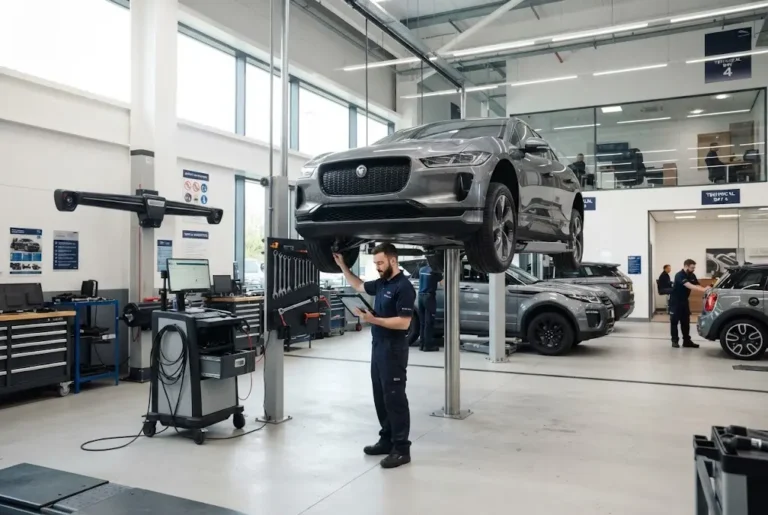
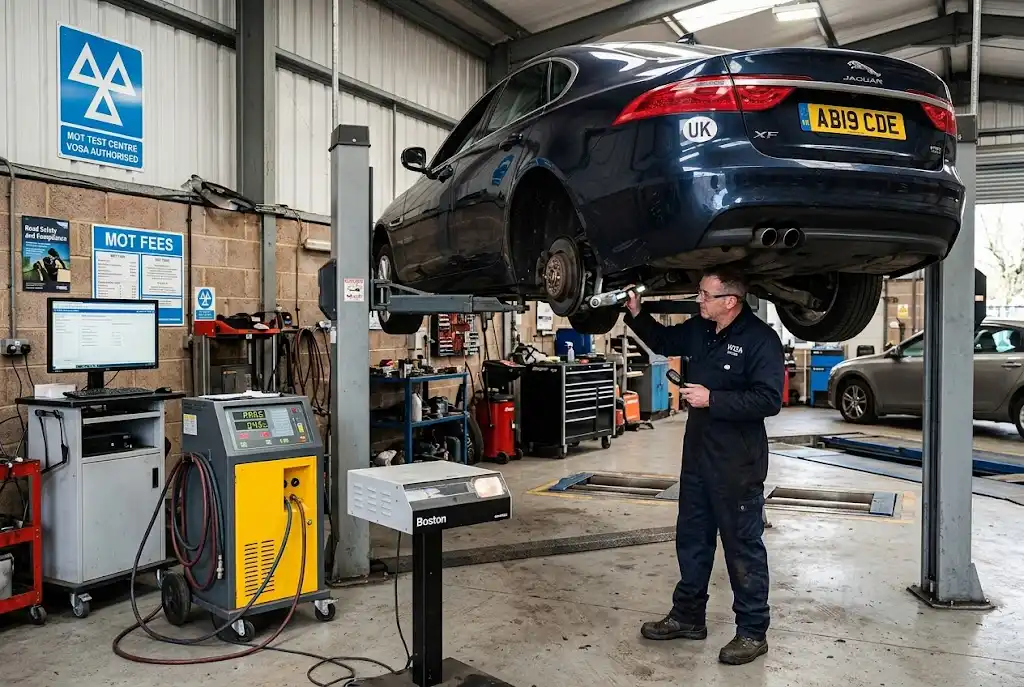
MOT and service are often discussed together, but they serve different purposes within the UK’s vehicle ownership system. An MOT is a statutory test designed to check whether a vehicle meets specified road safety and environmental standards at the time of testing. A service is broader maintenance intended to help keep the vehicle in suitable operating condition over its lifetime.
Understanding that distinction matters because passing an MOT does not mean a vehicle has received a full mechanical service. Equally, having a vehicle serviced does not replace its legal MOT requirement. For UK motorists, these two activities sit alongside each other as important parts of responsible vehicle ownership, while the wider testing system is governed by standards administered by the Driver and Vehicle Standards Agency (DVSA).
What Does MOT and Service Mean?
The phrase MOT and service commonly describes two separate activities that are frequently booked together. The MOT is a formal assessment against defined legal standards. Servicing is maintenance based on the vehicle manufacturer’s recommendations and the vehicle’s condition.
During an MOT, important vehicle components are inspected to determine whether they meet the applicable requirements. The official government guidance makes clear that the test does not cover everything about a vehicle: for example, the condition of the engine, clutch and gearbox is not part of the standard MOT assessment.
A service can therefore provide a broader opportunity to assess and maintain areas of the vehicle that are outside the statutory MOT test. This is one reason motorists should not treat an MOT certificate as a substitute for regular maintenance.
MOT and Service: What Is the Difference?
The simplest distinction is that an MOT is primarily a compliance and roadworthiness test, while servicing is a maintenance activity.
An MOT determines whether specified testable items meet the required standard at the time of inspection. A service, by contrast, can involve maintenance tasks such as checking fluids, replacing filters where required, inspecting components and following the manufacturer’s recommended maintenance schedule.
The difference becomes particularly important when a vehicle passes its MOT but still needs maintenance. Passing confirms that the vehicle met the applicable MOT standards for the items tested. It does not provide a guarantee that every mechanical or electrical component is in perfect condition.
For a wider look at planned maintenance and ownership costs, our vehicle maintenance guide examines how preventive care fits into the longer-term economics of keeping a vehicle.
When Does a Vehicle Need an MOT?
For most cars, the first MOT is generally required by the third anniversary of registration. After that, the test is normally required by the anniversary of the previous MOT. Some vehicle categories have different requirements, so owners should check the rules applicable to their particular vehicle.
GOV.UK states that the MOT checks whether a vehicle meets road safety and environmental standards. It also explains that vehicles over three years old generally need an annual MOT, subject to the applicable rules and exemptions.
Drivers can check their MOT status and history through the official government service. Keeping track of the expiry date is important because driving or parking a vehicle on a road when its MOT has expired is generally prohibited, except in specific circumstances such as travelling to a pre-arranged MOT test or to certain repair appointments permitted by the rules.
What Does an MOT Test Check?
The exact inspection depends on the vehicle class, but an MOT covers a defined range of safety and environmental items. For cars and passenger vehicles, the official inspection framework includes areas such as vehicle identification, brakes, steering, suspension, tyres and wheels, lights, body structure, seat belts and other relevant components.
Environmental considerations also form part of the test. Depending on the vehicle and its age and fuel type, emissions may be assessed. The official MOT inspection guidance includes specific requirements covering exhaust emissions, noise, exhaust systems and certain warning indicators.
The important point is that an MOT is a defined test rather than a complete mechanical health inspection. Its scope is determined by the official testing standards.
The Role of the DVSA
The DVSA has a central role in administering the MOT scheme in Great Britain. It sets and maintains the framework used by authorised testing organisations and approved testers.
According to the current DVSA testing guide, the agency administers the MOT service on behalf of the Secretary of State. Its responsibilities include documenting testing methods and standards, authorising those who meet the required standards, maintaining access to digital MOT records, monitoring testing performance and investigating complaints about testing standards.
This regulatory structure is important because an MOT is not simply a commercial inspection offered by any garage. Testing stations and testers must meet specific requirements, and DVSA oversees the system to support consistency and compliance.
Who Is Allowed to Carry Out an MOT?
MOT tests are carried out at authorised vehicle testing stations by testers who have been approved under the relevant DVSA requirements. The testing guide explains that commercial garages and some local authorities operate vehicle testing stations, while their staff and equipment are subject to the relevant authorisation and inspection requirements.
Testers are specifically trained and approved to carry out MOT tests. They must record test results through the MOT testing service and personally make decisions about the items being tested.
This distinction matters for motorists. A business may offer general vehicle servicing and repairs without necessarily being authorised to conduct MOT tests. Drivers booking an MOT and service appointment should therefore establish whether both elements will be carried out by appropriately authorised personnel.
Why an MOT Pass Does Not Replace a Service
One of the most common misunderstandings surrounding service and MOT appointments is assuming that an MOT pass confirms the overall health of the vehicle.
It does not.
The MOT is based on specified inspection standards. Items outside those requirements may not be assessed in the same way, while components can deteriorate between tests. The official government guidance specifically states that the engine, clutch and gearbox are not covered by the MOT test.
A service can therefore provide a different form of protection. By following the manufacturer’s maintenance schedule, owners can address routine maintenance requirements that are separate from the statutory test.
This distinction is especially relevant for motorists keeping vehicles for many years. A regular maintenance programme can help owners understand the vehicle’s condition instead of relying solely on its annual MOT result.
MOT Failures, Advisories and Repair Decisions
An MOT result can lead to different outcomes depending on the condition of the vehicle and the severity of issues identified. When a vehicle fails, the owner may need to have specified defects repaired before it can meet the relevant requirements.
MOT records can also contain advisories. These indicate issues that do not necessarily result in a failure but may deserve attention or monitoring. An advisory should not automatically be treated as an immediate major repair, but ignoring repeated warnings can allow a developing problem to become more significant.
This is where the relationship between testing and maintenance becomes important. An MOT can identify a condition that needs attention, while a repair or service can address the underlying issue. The two processes therefore work together without being interchangeable.
Why Road Safety Is Central to MOT Regulations
The purpose of the MOT system extends beyond administrative compliance. The official DVSA guidance states that the statutory test is intended to check that relevant vehicles comply with roadworthiness and environmental standards and contributes to the government’s road safety strategy.
Road safety depends on many factors, including driver behaviour, road conditions and vehicle condition. The MOT addresses a defined part of that wider picture by checking specified vehicle components against established standards.
For example, brakes, tyres, lights, steering and suspension can have important safety implications. Emissions and exhaust-related requirements also connect vehicle testing with environmental considerations.
Testing Standards Are Designed to Be Consistent
A national testing framework needs consistent standards so that vehicles are assessed according to the same fundamental requirements. The DVSA provides inspection manuals and testing guidance to support this process.
The official car and passenger vehicle inspection manual sets out inspection processes and rules for relevant MOT classes. It is periodically updated, meaning testing requirements and technical guidance can evolve as regulations and vehicle technology change.
This ongoing development is important because vehicles themselves are changing. Modern cars increasingly use electronic systems, advanced safety technologies and alternative powertrains, creating new technical considerations for the automotive testing and repair sector.
Technology Is Changing MOT Testing
Vehicle technology is becoming increasingly sophisticated, and the MOT system must operate within that changing environment. Modern vehicles can contain electronic warning systems, advanced lighting, sophisticated emissions controls and driver-assistance technologies.
The inspection process therefore relies on defined procedures and appropriate testing equipment rather than simply visual inspection. The DVSA guidance states that equipment used at vehicle testing stations must meet the relevant approval requirements.
This technological evolution is closely connected with the wider UK auto repair industry. Garages increasingly need technical skills and diagnostic capabilities that extend beyond traditional mechanical work.
MOT and Service for Modern and Electric Vehicles
Electric and hybrid vehicles are becoming an increasingly visible part of the UK vehicle fleet. Their presence raises questions about how established testing and maintenance practices apply to different powertrains.
The MOT remains focused on the components and standards defined by the applicable testing requirements. A different powertrain does not turn the MOT into a general assessment of every part of the vehicle.
Servicing, however, can vary substantially according to vehicle technology. Electric vehicles do not require the same engine-related maintenance as conventional petrol or diesel cars, but they still contain tyres, brakes, suspension, steering, cooling and electrical systems that require appropriate attention.
As the vehicle fleet changes, workshops will need to maintain suitable skills and equipment for different technologies. This reinforces the broader industry trend towards specialist training and diagnostic capability.
How MOT and Service Appointments Can Work Together
Many garages offer combined MOT and service appointments because the two activities complement each other. Having them arranged around the same time can be convenient for motorists and may make it easier to identify maintenance requirements.
However, drivers should understand what they are paying for. A combined booking does not necessarily mean that the service and MOT are the same inspection. They remain separate processes with different purposes.
Before authorising additional work, motorists can ask the garage to explain whether an item is required for the MOT, recommended as routine maintenance or identified as a separate repair issue. This can make invoices easier to understand and help customers make informed decisions.
Keeping Track of MOT History
Digital MOT records make it easier for motorists to understand a vehicle’s testing history. Previous results can provide useful information about recurring advisories, failures and the general pattern of issues identified during testing.
However, MOT history should be treated as one source of information rather than a complete maintenance record. A vehicle can have an extensive service history that does not appear in its MOT record, just as an MOT history cannot document every mechanical repair or maintenance task.
Combining MOT information with service invoices and maintenance records gives owners a more complete picture of the vehicle’s history.
The Importance of Using an Authorised MOT Centre
Because the MOT is a statutory test, motorists should ensure that their vehicle is taken to an appropriately authorised testing station. The DVSA’s framework defines the requirements for authorised examiners, vehicle testing stations, testers, facilities and equipment.
Consumers can also check the available government information about MOT testing and use the official system to manage relevant vehicle information. Where there is concern about testing standards, the DVSA has procedures for complaints and investigations.
The regulatory framework therefore provides mechanisms intended to protect the integrity of the testing process while giving motorists a defined route for raising concerns.
MOT Regulations and the Wider Automotive Industry
The MOT system is only one part of the UK’s wider automotive ecosystem. Testing stations interact with garages, repair businesses, parts suppliers, vehicle manufacturers, technicians and consumers.
A failed test can create demand for repair work. An advisory can influence a driver’s maintenance decisions. Changes to testing standards can require businesses to update equipment or training. In this way, regulation can have an economic impact throughout the wider vehicle servicing industry.
The relationship also works in reverse. As vehicle technology changes, regulators need testing standards that remain relevant to modern vehicles, while workshops need to understand how regulatory requirements apply to the vehicles they service.
How Drivers Can Prepare for an MOT
Drivers should not wait until the day of the test to think about their vehicle’s condition. Basic checks and regular maintenance can help identify obvious problems before an MOT appointment.
- Check that exterior lights are working correctly.
- Make sure tyres appear properly maintained and have adequate tread.
- Check that windscreens, mirrors and number plates are in suitable condition.
- Make sure the vehicle’s registration and identification details are accessible as required.
- Keep up with the manufacturer’s recommended servicing schedule.
- Address known safety-related problems rather than relying on the MOT to identify them.
These steps do not guarantee an MOT pass, because the official test covers a defined range of items using prescribed standards. They can, however, encourage better general vehicle care.
The Difference Between Compliance and Maintenance
The distinction between compliance and maintenance is central to understanding MOT and service requirements. Compliance asks whether the vehicle meets the legal standards assessed during the test. Maintenance asks what needs to be done to keep the vehicle operating appropriately over time.
Both are important, but they answer different questions.
A vehicle can pass an MOT while still requiring routine servicing. Similarly, a well-maintained vehicle can fail an MOT if a testable item does not meet the required standard at the time of inspection.
Understanding this difference can help motorists avoid false confidence and make more informed decisions about vehicle care.
Recent Changes to MOT Regulation
The UK MOT system is not static. The DVSA’s MOT testing guide was updated several times during 2026, covering areas including tester quality assurance, vehicle classes, equipment requirements, digital access and disciplinary processes.
One notable change took effect on 1 June 2026. Zero-emission goods vehicles with a design gross weight between 3,501kg and 4,250kg became class 7 vehicles for MOT purposes and require a class 7 MOT test. Their first class 7 test is due three years after registration.
The development illustrates how regulatory requirements can evolve as the composition of the vehicle fleet changes. Electric and zero-emission vehicles create different technical and operational considerations for testing infrastructure, equipment and workforce capabilities.
Digital Changes to the MOT Testing System
Regulatory reform is not limited to the physical inspection itself. The DVSA has also introduced changes to the digital systems used by MOT professionals.
From 25 June 2026, physical security cards stopped being accepted for signing in to the MOT Testing Service. Users signing in through email are required to authenticate at each sign-in, while authentication apps are recommended as the more secure option.
These changes demonstrate how compliance systems increasingly depend on secure digital processes as well as physical inspection standards.
Maintaining MOT Tester Standards
Quality assurance depends heavily on the competence and continuing development of MOT testers. The DVSA requires qualified testers to complete training and pass an assessment each year.
For the 2026 to 2027 training year, testers must complete at least three hours of MOT tester training for each group they test and successfully complete the annual assessment. Failure to meet the requirements can result in suspension of MOT tester status.
This continuing training requirement reflects the importance of keeping testing knowledge current as inspection standards and vehicle technology change.
MOT Reform and the Future of Vehicle Testing
The question of how MOT testing should evolve has been the subject of government consultation and public policy discussion. In January 2024, the government confirmed that the first MOT for cars would remain at three years after registration while longer-term modernisation work continued. It also said that modernising the test for electric and automated vehicles would be explored.
The direction of future reform is particularly relevant as newer vehicles increasingly incorporate electric propulsion, advanced driver assistance systems, complex electronics and connected technology.
Inspection procedures must therefore balance established safety requirements with the technical realities of modern vehicles. This is where developments in auto inspection services and vehicle diagnostics become increasingly relevant.
The Future of MOT and Service in the UK
The relationship between MOT and service is likely to become increasingly interesting as the UK’s vehicle fleet evolves. Electric vehicles, hybrid systems, connected technology and advanced driver assistance features are changing the technical environment in which vehicles are maintained and tested.
At the same time, traditional petrol and diesel vehicles will remain part of the fleet for many years. The industry therefore needs to support a mixture of technologies rather than moving instantly from one system to another.
Regulation will need to remain responsive to technological developments, while workshops will need to maintain appropriate training and equipment. For motorists, the basic principle remains straightforward: an MOT is an important statutory test, while servicing is an important part of ongoing vehicle maintenance.
Why MOT and Service Should Be Treated Separately
MOT and service work best as complementary parts of responsible vehicle ownership rather than as interchangeable terms. The MOT provides a regulated assessment of specified safety and environmental requirements, while servicing supports the broader maintenance needs of the vehicle.
The DVSA’s role helps maintain a national framework for testing standards, authorised testing stations and approved testers. Meanwhile, garages and technicians provide the servicing and repair expertise needed to keep vehicles functioning between tests.
For UK motorists, understanding this distinction can lead to better maintenance decisions. An MOT certificate should provide confidence that the vehicle met the applicable test requirements at the time of inspection, but regular servicing, sensible maintenance and prompt attention to developing faults remain essential parts of long-term vehicle ownership.