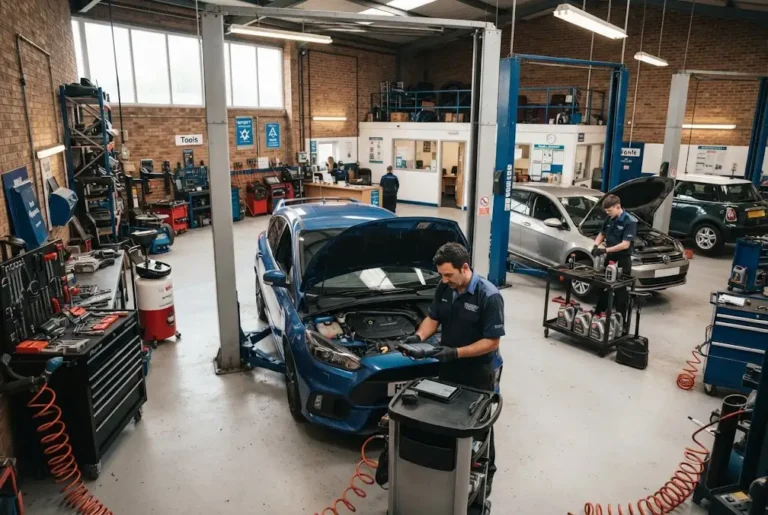
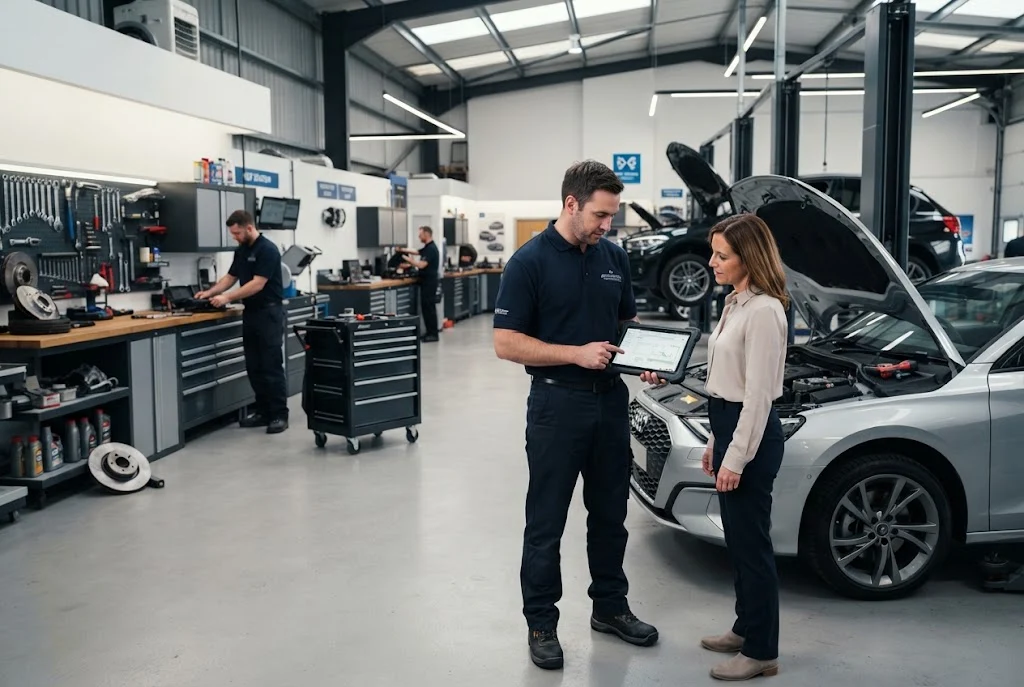
Car service cost has become an increasingly important concern for UK motorists. A routine service or repair can now involve several different expenses, from technician labour and replacement parts to diagnostic equipment, premises, insurance and business overheads. When these costs rise together, the final price paid by a vehicle owner can increase even when the underlying repair has not changed dramatically.
Understanding why maintenance prices vary is useful because automotive servicing is not a single-cost industry. The price of keeping a vehicle on the road depends on the vehicle itself, the work required, the parts used, local operating conditions and the type of business carrying out the work. Looking at these factors provides a clearer picture of why service bills can feel more expensive and why two motorists can receive very different estimates for apparently similar work.
What Determines Car Service Cost?
The first step in understanding car service cost is recognising that a vehicle service is made up of several components. Labour is one part of the bill, while parts, consumables, diagnostic work and workshop overheads can make up other portions.
The complexity of the vehicle also matters. A basic maintenance task may require relatively little time, while diagnosing an intermittent electronic fault can involve substantially more investigation. Modern vehicles contain numerous electronic systems, sensors and control modules, which can increase the technical expertise and equipment required.
The age and condition of the vehicle can also influence the final price. An older car may require additional repairs once worn components are identified, whereas a newer vehicle may involve different parts and diagnostic requirements.
Maintenance Costs Are Influenced by Labour
Labour is a significant component of automotive maintenance costs. A professional technician needs appropriate training, tools and experience to diagnose and repair vehicles safely. Businesses must also cover employment-related costs, training, administration and other expenses associated with maintaining a skilled workforce.
Labour becomes particularly important when a repair is difficult to diagnose. Replacing an easily accessible component can be relatively straightforward, but finding the source of an intermittent electrical problem may take considerably longer.
This is one reason comparing service prices purely by headline figures can be misleading. Two garages may quote different amounts because they have different labour rates, diagnostic capabilities or assumptions about how much work a particular job will require.
Parts and Supply Chains Affect Repair Pricing
Replacement parts are another major factor in repair pricing. A vehicle may have several possible parts options, including manufacturer-branded components, aftermarket alternatives and different quality levels within the aftermarket market.
Parts pricing can also be influenced by supply chains. Components may pass through manufacturers, distributors and retailers before reaching a workshop. Changes in availability, transportation expenses or supplier pricing can therefore affect the cost paid by the final customer.
Supply disruptions can create additional pressure when a commonly required component becomes difficult to source. A workshop may then have to wait for stock, find an alternative supplier or use a different compatible part, depending on the vehicle and repair.
The wider vehicle market also matters. As manufacturers introduce new models and technologies, workshops need access to appropriate parts and technical information. This can make some repairs more specialised than comparable work on older vehicles.
Inflation Does Not Affect Every Automotive Cost Equally
Inflation is often used as a broad explanation for rising prices, but automotive servicing contains several separate cost categories. Labour, parts, energy, premises, insurance, equipment and transportation can all experience different price movements.
UK economic data illustrates the importance of separating these categories. The Office for National Statistics tracks maintenance and repair services of motor vehicles as part of its producer price statistics. Its published data shows that the output price index for these services reached 161.4 in the second quarter of 2026, compared with 150.9 for 2025 as a whole.
This does not mean every garage has increased its prices by the same amount. Instead, it demonstrates that the cost environment facing the motor vehicle repair sector has changed over time.
Operating Expenses Are Part of the Final Bill
A garage’s operating expenses extend well beyond technician wages and replacement parts. Businesses need suitable premises, electricity, heating, waste management, insurance, equipment maintenance, software, administration and other services.
Diagnostic equipment can be particularly important for modern workshops. Professional garages may need increasingly sophisticated scanners, specialist tools and technical information systems to work effectively on newer vehicles.
These investments can improve the quality and range of services available to customers, but they also have to be recovered through the prices charged for automotive work.
Why Modern Vehicles Can Cost More to Maintain
Vehicle technology has become increasingly sophisticated. Many modern cars combine mechanical systems with electronic controls, sensors, cameras and software-driven functions.
This complexity can affect maintenance and repair work. A technician may need to diagnose an electronic issue before determining whether a physical component is actually faulty. Some repairs may also require calibration or additional diagnostic procedures after a component has been replaced.
For consumers, this means a service bill cannot always be compared directly with the cost of maintaining an older vehicle. The technical requirements can be fundamentally different.
Inspection and diagnostic technology is becoming an increasingly important part of this process. Our article on auto inspection services and modern vehicle inspections explains how structured inspections combine physical assessment with diagnostics and engineering principles.
Labour Shortages Can Put Pressure on Prices
Labour shortages can influence automotive servicing in several ways. If experienced technicians are difficult to recruit, businesses may need to offer more competitive wages and invest more heavily in training.
The skills required are also changing. Technicians increasingly need knowledge of electronics, diagnostics and new vehicle technologies alongside traditional mechanical skills. Hybrid and electric vehicles can introduce additional technical and safety requirements.
Training takes time and investment. A workshop that develops specialist capabilities may therefore face higher costs before it can recover those investments through its service operations.
Why Regional Differences Matter
Regional differences can make a noticeable contribution to automotive service pricing. Garages operating in areas with higher commercial rents, wages or other business expenses may need higher labour rates to remain sustainable.
Customer demand can also vary by location. A densely populated area may have different competitive conditions from a rural market where there are fewer workshops serving a wider geographic area.
Travel is another consideration, particularly for mobile technicians. A service provider travelling significant distances may need to account for fuel, time and vehicle operating expenses when calculating a price.
This is one reason consumers should be cautious about assuming that a price quoted in one part of the UK will represent the typical price everywhere else.
Mobile Servicing Can Change the Cost Structure
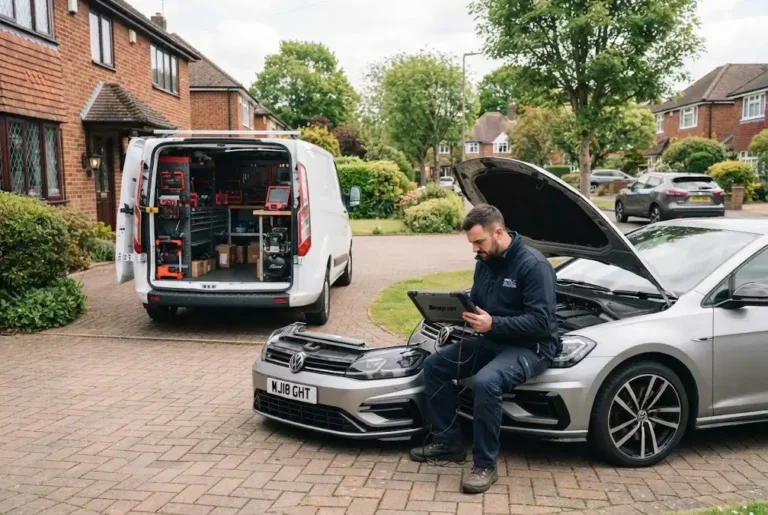
Alternative service models can have different cost structures from conventional garages. As discussed in our article about mobile auto service and changing industry models, mobile technicians can perform suitable maintenance and repairs at a customer’s location.
A mobile business may avoid some traditional workshop expenses, but it has other costs, including vehicle operation, travel time, portable equipment and the practical limitations of working outside a fixed facility.
For customers, the value of this model may therefore involve more than the quoted repair price. Saving a journey to a garage and reducing vehicle downtime can have a practical financial value, particularly for people who depend heavily on their vehicles.
Why Repair Estimates Can Change After Diagnosis
Drivers sometimes become frustrated when an initial estimate changes after a vehicle is inspected. However, this can happen because the original estimate was based on limited information.
A technician may identify an additional worn component, discover that a suspected fault has a different cause or find that a repair requires more labour than initially expected. A responsible service provider should explain why the additional work is necessary before proceeding wherever practical.
This is where professional inspection becomes valuable. A structured assessment can help establish the condition of relevant components before a final repair decision is made.
Customers can also ask which work is essential immediately and which items can be monitored. Understanding priorities makes it easier to manage maintenance when budgets are limited.
Does a Higher Price Always Mean Better Service?
Not necessarily. Price is only one indicator of value. A higher quote may reflect additional expertise, better equipment, more comprehensive diagnostics, higher-quality parts or greater business overheads. However, a higher price alone does not guarantee better workmanship.
Similarly, the cheapest estimate is not automatically the best option. Drivers should consider what is included, which parts are being used, whether diagnostic work is included and what warranty or aftercare arrangements apply.
Clear communication is therefore important. A useful estimate should allow the customer to understand what work is proposed and why.
How Consumers Can Manage Rising Maintenance Costs
Drivers cannot control every factor affecting vehicle prices, but they can make maintenance decisions that reduce unnecessary financial surprises.
Regular servicing and inspections can help identify developing issues before they become more complicated. Keeping records of previous repairs also makes it easier to understand what has already been replaced and what may require attention in the future.
It is also sensible to ask for a breakdown of larger estimates. Understanding the approximate contribution of labour, parts and additional services can make comparisons more meaningful.
Motorists should also distinguish between safety-critical repairs and items that may simply require monitoring. A professional assessment can help establish the appropriate priority.
The Link Between Consumer Behaviour and Service Prices
Rising prices can influence how motorists approach maintenance. Some drivers may shop around more carefully, while others may postpone non-urgent work. These reactions form part of the wider consumer behaviour surrounding auto care services and maintenance decisions.
For automotive businesses, this makes transparency increasingly important. When customers understand why a repair is necessary and how the estimate has been calculated, they are more likely to view the service as a considered technical decision rather than simply an unexpected expense.
What Could Happen to Car Service Cost in the Future?
Future pricing will depend on several competing forces. More sophisticated vehicles could increase the technical demands placed on workshops, while improvements in diagnostic technology may make some investigations faster and more efficient.
The transition toward electric vehicles may also change the composition of automotive maintenance. Some traditional mechanical requirements may become less prominent, while battery systems, electronics, software and specialist diagnostics become more important.
At the same time, the automotive industry is undergoing broader structural change. Our coverage of the automotive industry and its future transformation looks at how digital servicing, electrification and emerging technologies could reshape the market.
Final Thoughts
Car service cost is influenced by far more than the price of a single replacement part. Labour, technical skills, supply chains, inflation, workshop overheads, diagnostic equipment, regional conditions and vehicle complexity can all contribute to the final bill.
For UK motorists, understanding these factors can make service estimates easier to evaluate. A higher price does not automatically mean poor value, just as a low price does not automatically represent a good deal. The important question is what the customer is receiving, why the work is required and whether the service is appropriate for the vehicle.
As automotive technology continues to evolve, maintenance will also change. Drivers who keep informed, maintain useful service records and ask clear questions will be better positioned to manage the financial side of vehicle ownership while still giving safety and reliability the attention they deserve.