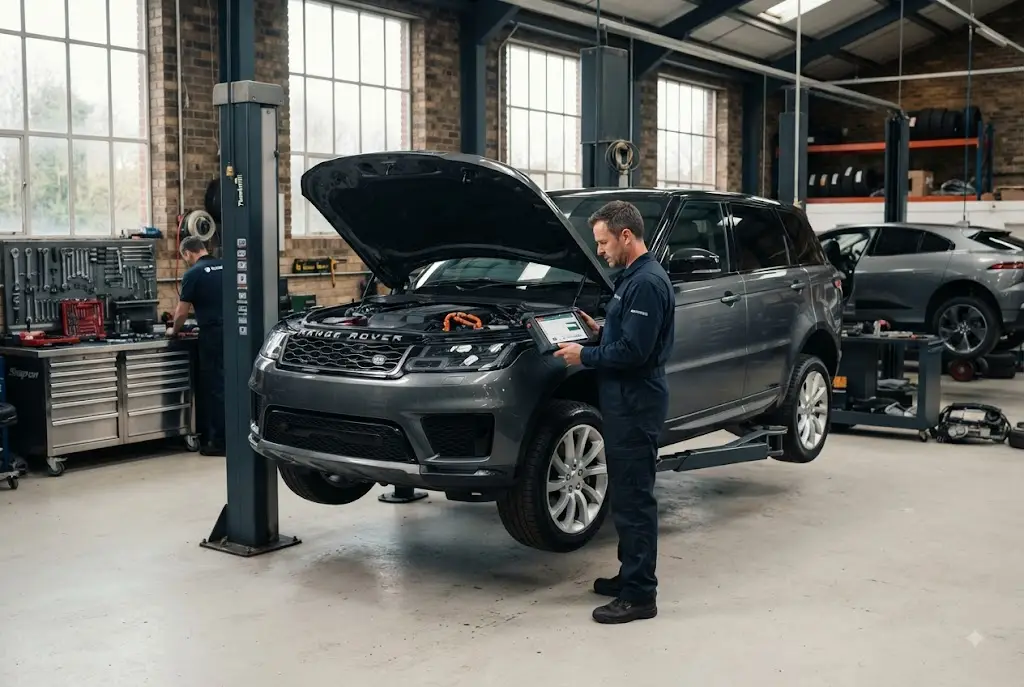
Hybrid servicing is becoming an increasingly important part of the UK’s automotive maintenance industry as more drivers choose vehicles that combine an internal combustion engine with electric propulsion. These vehicles still require many familiar maintenance procedures, but their electrical systems, battery technology and regenerative braking introduce additional considerations for owners and workshops.
For motorists, the biggest question is often whether a hybrid needs specialist maintenance. The answer depends on the vehicle and the type of work required. Routine servicing can include many of the same checks found on conventional cars, while work involving high-voltage components requires appropriate equipment, procedures and technician training.
Understanding how hybrid maintenance works can help owners choose the right workshop, follow the manufacturer’s service schedule and recognise why some aspects of hybrid ownership differ from traditional petrol or diesel driving.
What Does Hybrid Servicing Involve?
Hybrid servicing covers the routine inspection and maintenance of a vehicle’s mechanical and electrical systems. A hybrid may contain an engine, electric motor or motors, high-voltage battery, power electronics, regenerative braking system and conventional components such as tyres, suspension and steering.
Not every service requires a technician to work directly on the high-voltage system. Routine maintenance can involve checking fluids, brakes, tyres, suspension, steering, filters and other components while following the manufacturer’s specified procedures.
However, the presence of high-voltage equipment means technicians need to understand the relevant safety procedures. The Institute of the Motor Industry (IMI) has dedicated qualifications for routine maintenance on electric and hybrid vehicles, including training on recognising high-voltage hazards and safely isolating systems before appropriate maintenance work.
This distinction is important because “hybrid servicing” does not necessarily mean that every garage employee is qualified to repair every part of a hybrid system. The level of technical competence required depends on the work being undertaken.
How Hybrid Services Differ From Conventional Car Maintenance
Many hybrid maintenance tasks remain familiar to experienced mechanics. Tyres still need inspection, suspension components can wear, fluids require attention and the vehicle must remain compliant with MOT requirements.
There are, however, several areas where hybrid systems change the maintenance picture.
Regenerative braking
Hybrid vehicles can use the electric motor to slow the vehicle and recover some kinetic energy. This regenerative braking can reduce the amount of work performed by conventional friction brakes under certain driving conditions.
That does not mean brake maintenance becomes unnecessary. Brake components still require inspection because corrosion, wear and other issues can affect braking performance.
High-voltage systems
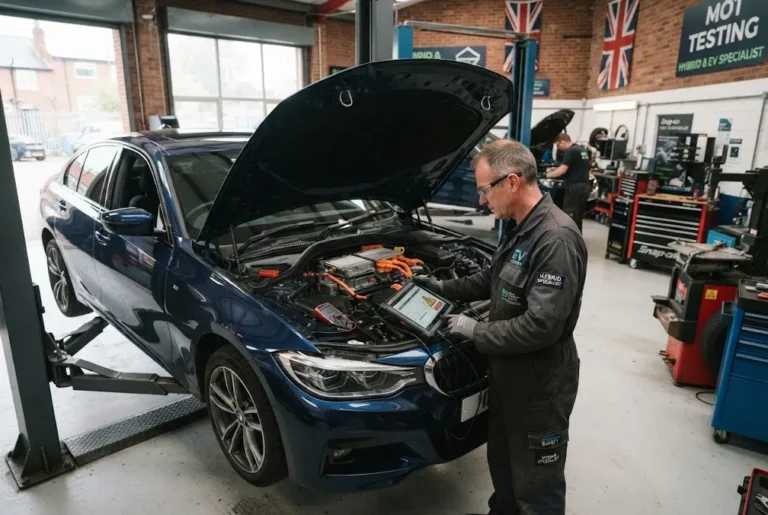
The high-voltage battery and associated electrical components require appropriate safety procedures. Technicians working directly on these systems need suitable training and equipment.
IMI’s higher-level training covers diagnosis, testing and repair of electric and hybrid high-voltage systems, illustrating the difference between routine maintenance and specialist electrical repair.
Diagnostic systems
Modern hybrids rely heavily on electronic control systems. A warning light or performance issue may therefore require diagnostic equipment capable of communicating with the vehicle’s relevant control modules.
For workshops, this means hybrid capability is not simply a matter of having conventional mechanical tools. Training, diagnostic software, safety equipment and technical information can all become important parts of the service operation.
Toyota Hybrid Service as an Example
Toyota hybrid service provides a useful example of how manufacturers structure maintenance for hybrid vehicles. Also Toyota says its hybrid vehicles should generally be serviced every 12 months or 10,000 miles, whichever comes first, although the correct schedule depends on the specific vehicle and its service requirements.
Toyota also says its Hybrid Service includes checks of the hybrid system and hybrid battery. Its service information states that qualifying annual hybrid servicing can support eligibility for additional Hybrid Battery Extended Cover, subject to the applicable terms and conditions.
This demonstrates why owners should check the manufacturer’s requirements rather than assuming every hybrid follows the same maintenance schedule.
Toyota’s service information also shows that hybrid maintenance is not necessarily dramatically different from conventional servicing for every customer. Routine maintenance remains a mixture of standard vehicle checks and hybrid-specific inspections, depending on the model and service level.
Does a Hybrid Battery Need Regular Servicing?
One of the most common questions surrounding hybrid ownership concerns the battery. The high-voltage battery is a major component of the vehicle, but that does not mean owners normally have to dismantle or service individual battery cells as part of routine maintenance.
Instead, manufacturers and qualified workshops can inspect the relevant hybrid system and monitor the vehicle for faults or abnormal behaviour. If a problem is identified, the required repair depends on the battery design, vehicle manufacturer and specific fault.
Battery technology is also continuing to evolve. Different hybrid vehicles use different battery chemistries, configurations and control systems, so general statements about battery lifespan or repair costs should be treated cautiously.
For motorists, the most useful approach is to follow the manufacturer’s maintenance programme and investigate warning messages promptly rather than waiting for a suspected battery problem to become severe.
Battery Technology Is Changing Workshop Skills
Battery technology is one of the areas that most clearly separates modern hybrid servicing from traditional vehicle maintenance.
Technicians need to understand how high-voltage systems operate, how they can be isolated safely and which components can be handled within their level of qualification. IMI’s current training framework includes dedicated pathways for routine maintenance as well as more advanced diagnosis and repair of hybrid and electric systems.
This creates a tiered technical environment. A technician who is qualified for routine hybrid maintenance should not automatically be assumed to have the qualifications required for live high-voltage component repair.
For workshop owners, that distinction has commercial implications. Investing in the right training can allow a business to serve a larger proportion of the modern vehicle fleet, while also helping ensure that high-voltage work is carried out using appropriate safety procedures.
Why Hybrid Ownership Still Includes Conventional Maintenance
Hybrid technology changes the drivetrain, but it does not eliminate the rest of the vehicle.
Owners still need to consider tyres, wheel alignment, suspension, steering, lights, wipers, cabin filters and other components. Depending on the vehicle, the combustion engine may still require engine oil, filters, coolant and other routine maintenance.
This means hybrid ownership should not be viewed as maintenance-free driving. Instead, it involves a different combination of mechanical and electrical maintenance requirements.
For example, tyre condition remains important because the vehicle’s weight, power delivery and braking characteristics still place demands on the tyres. Our related research into wheel alignment examines how steering geometry, tyre wear and handling performance can affect vehicle safety.
How Hybrid Servicing Supports Long-Term Ownership
Regular maintenance can help owners identify problems before they become more serious. This is particularly useful for vehicles containing multiple interconnected systems.
A scheduled inspection can identify worn tyres, brake issues, fluid problems, suspension wear or electronic warnings. Keeping service records can also make it easier to understand how a vehicle has been maintained over time.
Manufacturer service programmes can provide additional structure. Toyota, for example, allows owners to access service history through its MyToyota system and says keeping a service history helps demonstrate that a vehicle has been properly maintained.
For used hybrid buyers, documented maintenance can therefore be particularly useful when assessing a vehicle’s condition and understanding what work may be due next.
Can Any Garage Service a Hybrid?
A capable garage can perform many maintenance tasks on hybrid vehicles, but motorists should check that the workshop has the appropriate skills and equipment for the work required.
The key question is not simply whether the business advertises “hybrid services”. Owners should ask whether the technicians are appropriately trained for the specific vehicle and whether the workshop can safely handle the type of repair being requested.
This becomes especially important when the work involves high-voltage components. IMI’s accreditation and qualification framework distinguishes between routine maintenance and more advanced high-voltage diagnosis and repair.
Manufacturer workshops can offer another option, particularly when an owner wants brand-specific expertise, manufacturer diagnostic systems or a service programme tied to a particular warranty or battery coverage arrangement.
Hybrid Servicing and the Growth of Sustainable Transport
Hybrid vehicles occupy an interesting position in the development of sustainable transport. They combine conventional fuel use with electric propulsion and can reduce reliance on the combustion engine during suitable driving conditions.
They are also an important part of the broader transition towards electrified transport. Many drivers may move from conventional petrol or diesel vehicles to hybrids before considering a fully electric vehicle, while others may use hybrids because their driving patterns or charging circumstances make them attractive.
For the automotive service industry, this transition means workshops increasingly need to understand several types of electrified powertrain rather than treating electric vehicles as a distant specialist category.
Our wider EV servicing research will examine how fully electric vehicles are changing workshop requirements, including EV mechanics, battery servicing, charging infrastructure and industry readiness.
Hybrid Servicing During the EV Transition
The relationship between hybrid and electric vehicles is important for automotive businesses. A workshop that develops hybrid competence can begin building experience with high-voltage vehicle safety, diagnostic procedures and electrified drivetrains.
However, hybrid expertise does not automatically mean that a workshop can perform every type of EV repair. Pure electric vehicles have their own architectures, battery systems and technical requirements.
For this reason, the transition should be viewed as a gradual expansion of workshop capability. Businesses may begin with routine hybrid maintenance, add specialist training and equipment, and then develop deeper EV capabilities as customer demand grows.
IMI’s training structure reflects this progression, with qualifications covering routine electric and hybrid maintenance as well as advanced system repair and replacement.
What Hybrid Owners Should Ask a Garage
Before booking a hybrid vehicle for maintenance, owners can ask a few straightforward questions:
- Does the workshop regularly service hybrid vehicles?
- Are the technicians trained to work safely around high-voltage systems?
- Can the workshop perform the specific diagnostic or repair work required?
- Does the service follow the vehicle manufacturer’s recommended schedule?
- Will the workshop provide a clear record of the work completed?
These questions can help distinguish between a workshop that simply accepts hybrid vehicles and one that has developed meaningful hybrid capability.
Owners should also check the vehicle handbook or manufacturer’s online service information for the correct maintenance interval. Service schedules vary between makes and models, so generic advice should not replace manufacturer guidance.
What Hybrid Servicing Means for Automotive Service Companies
The growth of hybrid vehicles is also changing the wider business model of automotive service companies. Workshops need to decide how much to invest in training, diagnostic equipment and high-voltage safety infrastructure.
For larger garage chains, investment can be spread across a network and supported by central training programmes. Independent garages face different commercial decisions but may gain a competitive advantage by developing specialist hybrid capabilities in their local market.
The issue is ultimately about matching workshop capability with the changing vehicle parc. Businesses that ignore electrified vehicles risk losing future customers, while those that invest appropriately can expand the range of services they provide.
The Future of Hybrid Services in Britain
Hybrid services are likely to remain relevant even as the UK vehicle market moves towards greater electrification. The existing hybrid fleet will require maintenance for many years, while used hybrids will continue to enter the second-hand market.
That creates a long-term opportunity for workshops that develop the necessary technical expertise. It also means consumers will increasingly expect garages to understand both conventional mechanical maintenance and electrified vehicle systems.
Battery diagnostics, high-voltage safety, electronic fault finding and technician training are likely to become increasingly important parts of workshop capability. At the same time, conventional maintenance will remain essential because hybrid vehicles still contain many familiar mechanical components.
Final Thoughts on Hybrid Servicing
Hybrid servicing combines familiar vehicle maintenance with specialist considerations created by electric motors, high-voltage systems and battery technology. For owners, the key is to follow the correct service schedule and choose a workshop with appropriate training and equipment for the required work.
Toyota’s hybrid service programme illustrates how manufacturers can integrate hybrid-system checks into regular servicing, while IMI’s training framework shows why technician competence matters when high-voltage systems are involved.
For Britain’s automotive service industry, hybrids are also part of a much broader transition. Workshops are increasingly preparing for a vehicle fleet in which conventional engines, hybrids and fully electric vehicles coexist. Businesses that invest sensibly in training and technology can position themselves to serve that changing market while maintaining the mechanical expertise that remains essential today.