The automotive industry is entering a period of structural change that will affect not only how vehicles are designed and manufactured, but also how they are inspected, maintained and repaired. Electric vehicles, connected systems, advanced diagnostics, artificial intelligence and changing customer expectations are gradually reshaping the relationship between motorists and automotive service providers.
For decades, vehicle servicing was largely built around mechanical components, scheduled maintenance and physical workshop inspections. Those fundamentals remain important, but modern vehicles increasingly combine mechanical engineering with software, sensors, electronic control units and connected technologies. As a result, the future of servicing will require a broader combination of technical skills, digital tools and data-driven processes.
The transition is already visible in the UK. In August 2026, the government launched a review of the Zero Emission Vehicle mandate, while reporting that more than one in four new cars sold were electric and that more than two million electric vehicles were registered on UK roads.
Why the Automotive Industry Is Changing
The modern automotive sector is being influenced by several developments at the same time. Electrification is changing vehicle powertrains, software is becoming more important, connected technologies are generating more information and consumers are demanding greater convenience.
These changes are interconnected. An electric vehicle requires different maintenance knowledge from a conventional petrol or diesel car. A connected vehicle can generate information that helps identify potential faults. Digital booking and mobile servicing can change how customers access technicians.
Consequently, the future of automotive servicing is unlikely to be defined by one technology. Instead, it will involve several technologies and business models working together.
Industry Transformation Is Changing the Workshop
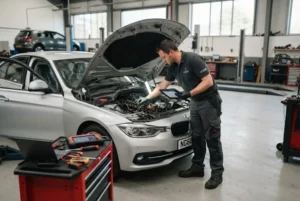
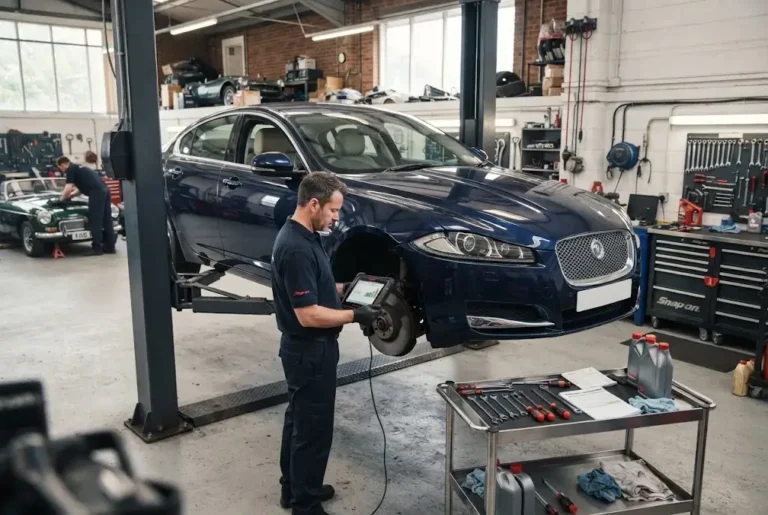
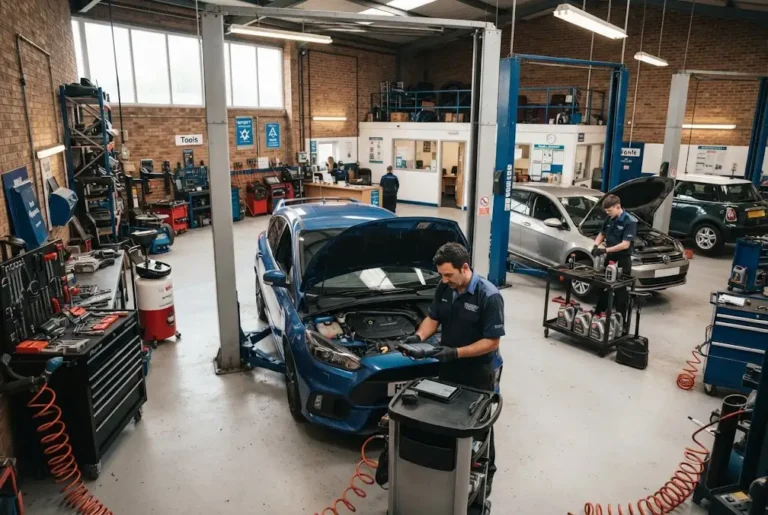
Industry transformation is already affecting traditional workshops. A modern technician may need to work with mechanical components while also understanding electronic systems, diagnostic software, sensors and manufacturer-specific technical information.
This does not mean traditional mechanical skills are becoming irrelevant. Brakes, suspension, steering, tyres, body components and many other physical systems still require hands-on inspection and maintenance.
The difference is that technicians increasingly need both mechanical and digital capabilities. A fault that once required a simple physical diagnosis may now involve electronic testing before the underlying mechanical issue can be identified.
This is one reason structured auto inspection services and modern vehicle inspections are becoming increasingly important. Physical checks and electronic diagnostics need to complement each other rather than operate as separate processes.
The EV Transition Will Reshape Servicing
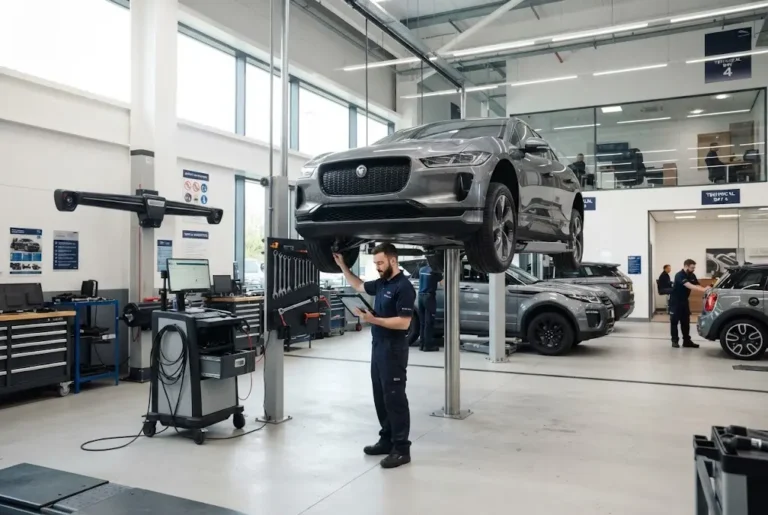
The EV transition is one of the most significant changes affecting automotive servicing. Electric vehicles do not have the same powertrain architecture as conventional internal-combustion vehicles, which changes the types of maintenance and technical knowledge required.
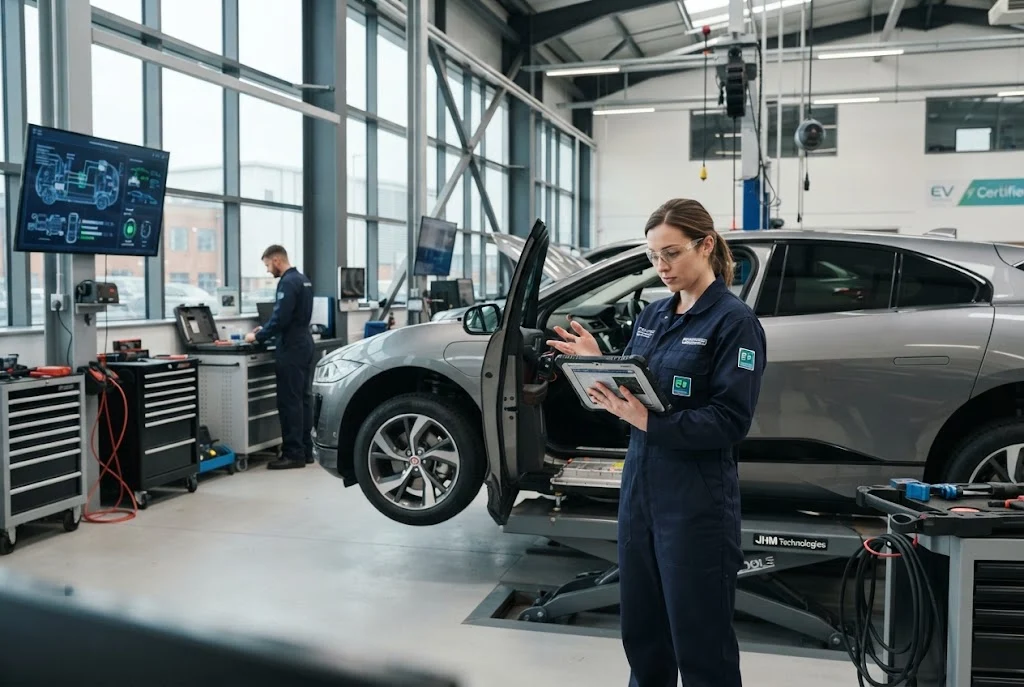
Battery systems, electric motors, high-voltage components, charging systems and sophisticated electronic controls create new areas of expertise for service professionals. At the same time, some traditional maintenance requirements can change because an electric drivetrain has fewer conventional mechanical components.
The UK government’s current policy direction continues to encourage the transition toward zero-emission vehicles. Its August 2026 consultation is reviewing the ZEV mandate and the pathway toward the government’s stated objectives for new zero-emission car and van sales.
For workshops, the important issue is preparation. Technicians need appropriate training, equipment and safety procedures to work on high-voltage systems. The aftermarket sector has already been adapting: an SMMT report published in 2025 found that more than four in five surveyed workshops were equipped to service EVs, while many expected further investment in EV capability and advanced driver-assistance technology.
Digital Servicing Will Become More Important
Digital servicing is another major development. Vehicle owners are increasingly interacting with service providers through websites, apps, digital booking systems and online communication channels.
For workshops, digital tools can improve appointment management, customer communication and service records. For motorists, they can make it easier to arrange inspections, receive updates and understand the status of a vehicle.
Digital servicing can also support preventative maintenance. If vehicle data identifies a potential issue, the driver may have an opportunity to arrange an inspection before the problem develops into a more serious fault.
However, digital information does not eliminate the need for professional judgement. A software notification or diagnostic code can provide useful evidence, but technicians still need to determine what caused the issue and whether physical inspection or testing is required.
AI Diagnostics Could Change Fault Detection
AI diagnostics are likely to become an increasingly visible part of automotive servicing. Artificial intelligence can potentially help analyse large volumes of vehicle data, identify patterns and support technicians when investigating complex faults.
The most useful role for AI may not be replacing technicians, but helping them process information more efficiently. Modern vehicles can produce substantial quantities of diagnostic data. Tools capable of identifying unusual patterns or prioritising likely causes could help technicians focus their investigation.
AI could also contribute to preventative maintenance by identifying combinations of signals that indicate developing problems. This could move servicing gradually away from a purely scheduled model toward a more condition-based approach.
There are still important limitations. AI recommendations need appropriate data, reliable system integration and human oversight. A prediction should not automatically be treated as proof of a mechanical fault.
Access to Vehicle Data Will Matter
As vehicles become more digital, access to technical and diagnostic information becomes increasingly important for the wider repair market. In May 2026, the UK government published an explanatory memorandum concerning standardised access to vehicle on-board diagnostic information and repair and maintenance information.
This issue matters because independent workshops need appropriate information and tools to diagnose and repair increasingly sophisticated vehicles. If technical information becomes easier to access through appropriate systems, service providers may be better positioned to support customers across different vehicle technologies.
Data access also raises questions about security, privacy and the responsible use of vehicle information. The future service ecosystem will therefore need to balance accessibility with appropriate safeguards.
Connected Vehicles Could Change Preventative Maintenance
Connected vehicles can communicate information that was previously available only after a technician physically inspected the car. This creates opportunities for more proactive servicing.
Instead of waiting for a driver to notice a warning light, a connected system could potentially identify an abnormal pattern earlier. Service providers could then contact customers or recommend an inspection based on relevant vehicle information.
This approach could change the relationship between motorists and workshops. Servicing may become more continuous, with vehicle condition monitored between traditional appointments rather than assessed only when the customer arrives at a garage.
It also creates an opportunity to improve the customer experience. If a problem can be identified earlier, the owner may have more time to plan the repair and potentially reduce disruption.
Mobile Servicing Will Complement Digital Technology
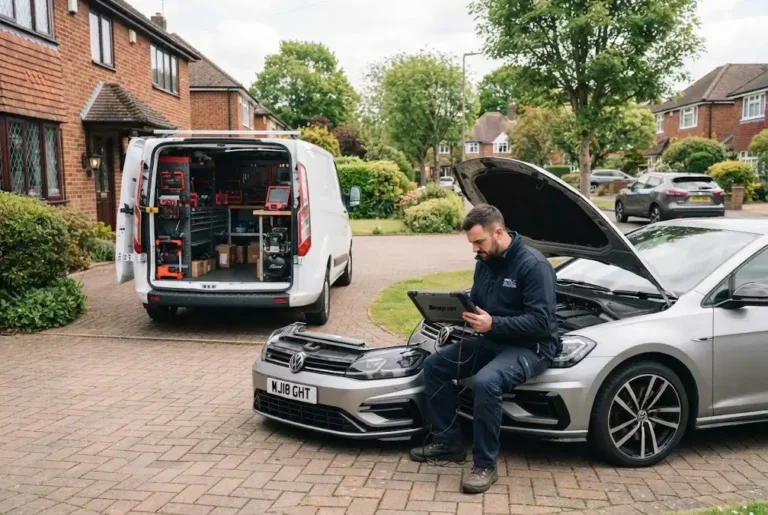
The growth of digital vehicle information is likely to work alongside alternative service models. Mobile auto service already demonstrates how technicians can bring suitable maintenance and diagnostic work directly to customers.
As diagnostic tools become more portable and vehicle information becomes more accessible, the range of problems that can be assessed outside traditional workshops may expand.
Nevertheless, mobile servicing will have practical limits. Major repairs, specialist equipment and certain high-risk procedures may still require a fully equipped workshop. The future is therefore more likely to involve a mixture of fixed facilities and mobile service models rather than one replacing the other.
Changing Skills and Labour Requirements
The future of automotive servicing depends heavily on people. New technology can improve diagnosis and efficiency, but skilled professionals are still needed to interpret information, perform repairs and make safety-critical decisions.
Technicians may increasingly need training across several disciplines, including mechanical engineering, electrical systems, electronics, software and diagnostic technology. The transition toward EVs adds further requirements around high-voltage safety and specialised systems.
This creates a significant workforce challenge. Businesses must not only recruit technicians but also continuously develop existing staff as vehicle technology changes.
Government-backed investment is already targeting this wider transformation. In August 2026, the UK government announced almost £130 million for next-generation zero-emission vehicle technologies, with the programme expected to support more than 1,800 high-value manufacturing jobs and additional supply-chain employment.
The Customer Experience Will Become Part of Servicing
Technical capability is only one part of the future service market. Customer expectations are changing as people become accustomed to convenient digital services in other industries.
Drivers increasingly expect easy booking, clear estimates, timely updates and straightforward explanations. They may also prefer flexible options that minimise vehicle downtime.
This is closely connected to the factors explored in our article on auto care services and consumer behaviour. Customers make maintenance decisions based on cost, trust, convenience, previous experiences and their understanding of vehicle condition.
Service businesses that combine technical quality with a strong customer experience may therefore have an advantage as competition evolves.
Economic Pressures Will Still Matter
Technology will not remove the economic pressures affecting vehicle servicing. Labour, parts, equipment, training, premises and supply chains will continue to influence operating costs.
As discussed in our analysis of car service cost and rising maintenance expenses, motorists are already sensitive to the financial side of vehicle ownership. Future servicing businesses will need to invest in new capabilities while keeping services commercially viable.
Automation and better diagnostics could improve efficiency in some areas, but advanced equipment and specialist training also require investment. The challenge will be finding a sustainable balance between technology adoption, service quality and affordability.
Future Mobility Could Expand the Definition of Automotive Service
Future mobility extends beyond private car ownership. Connected and automated vehicles, shared mobility, fleet services and emerging transport models could influence how vehicles are maintained and where servicing takes place.
Fleet operators may place greater emphasis on predictive maintenance because vehicle downtime can directly affect business operations. Connected systems could help fleet managers identify issues across multiple vehicles and plan maintenance more efficiently.
Automated and connected mobility could also create new service requirements around sensors, software, communications systems and automated-driving hardware. In May 2026, the UK government announced a partnership focused on advancing self-driving technology, including safety assurance, large-scale simulation and integration of automated driving into production vehicles.
Industry Forecasts Should Be Treated Carefully
There is considerable interest in industry forecasts, but the future of automotive servicing should not be presented as a single predetermined outcome. Technology adoption depends on vehicle sales, consumer demand, regulation, infrastructure, investment and economic conditions.
The UK’s current policy environment illustrates this uncertainty. The government is reviewing the ZEV mandate while continuing to support investment in electrification and automotive innovation.
This means businesses should prepare for multiple scenarios rather than assume that one technology or service model will dominate immediately.
Structural Change Will Reward Adaptable Businesses
The biggest long-term shift may be the move from a purely mechanical service industry toward a broader technical ecosystem. Workshops will continue repairing physical components, but they will increasingly interact with software, vehicle data, connected systems and advanced diagnostics.
Businesses that adapt their training, equipment and customer processes can position themselves for this change. Those that rely entirely on older service methods may find it increasingly difficult to support newer vehicles.
At the same time, the traditional fundamentals of professional servicing remain important. Accurate diagnosis, safe working practices, quality repairs and clear communication will continue to determine whether customers trust a service provider.
What the Future of Automotive Servicing Could Look Like
The future service experience could involve a combination of connected vehicle monitoring, digital booking, remote diagnostics, AI-assisted fault analysis and physical inspection. A vehicle might identify an emerging issue, transmit relevant information, allow the customer to arrange an appointment digitally and help a technician prepare for the required work before the vehicle arrives.
For suitable jobs, a mobile technician could potentially complete the work at the customer’s location. More complex repairs could be directed to a specialist workshop equipped for the task.
This model would not eliminate the need for human expertise. Instead, technology could help technicians spend more time solving problems and less time gathering basic information.
Final Thoughts
The automotive industry is moving toward a future where mechanical engineering, electrification, software, data and artificial intelligence increasingly overlap. Vehicle servicing will evolve alongside these changes, requiring workshops and technicians to develop new capabilities while maintaining the fundamentals of safe and reliable repair.
For motorists, the transition could eventually mean more convenient servicing, earlier fault detection and greater access to information about vehicle condition. However, it may also create new expectations around digital systems, technical expertise and service costs.
The most realistic view is not that traditional automotive servicing will disappear. Instead, it will become more technologically sophisticated. Workshops, mobile technicians, diagnostic specialists and digital service providers will all have roles to play in a market where vehicle technology continues to advance.
The businesses best prepared for this future are likely to be those that combine engineering knowledge with digital capability, invest in their people and understand what customers actually need. That combination will help determine how the next generation of automotive servicing develops across the UK.