
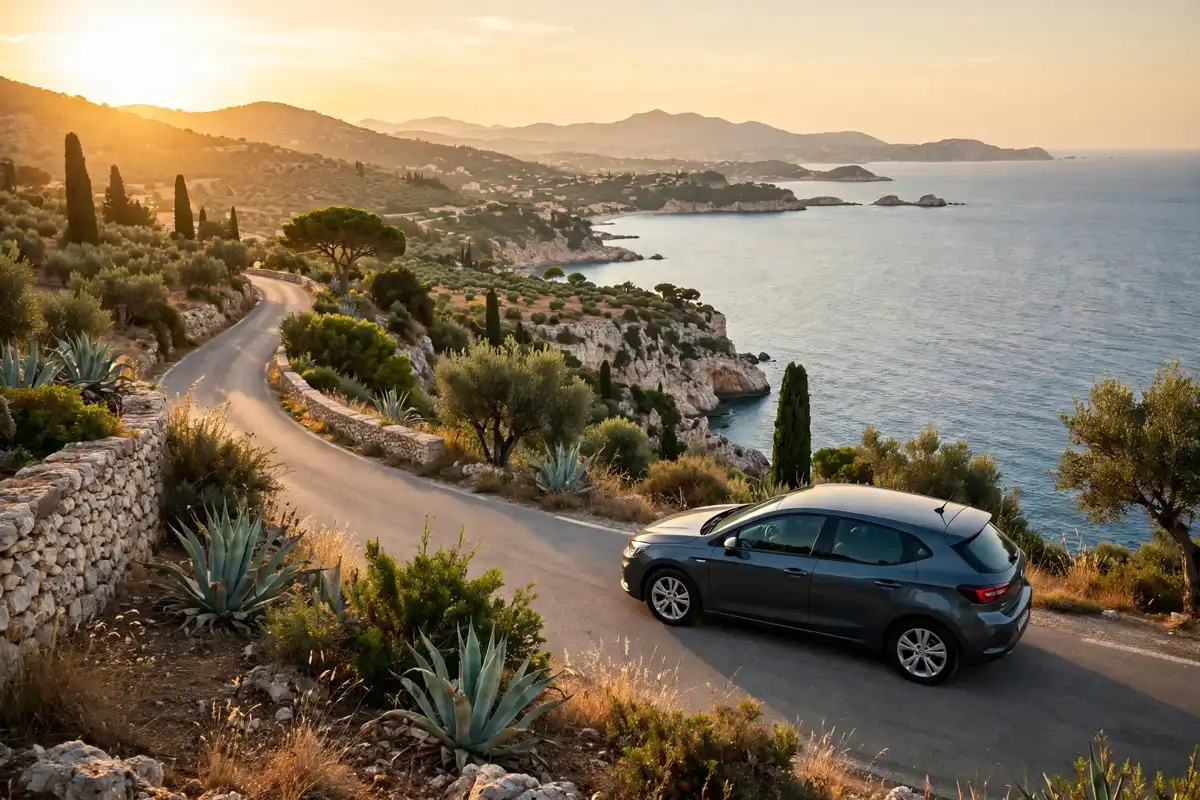
Taking your own car across the Channel remains one of the great British holiday pleasures: your luggage in the boot, your schedule your own, and the open road waiting on the other side. But driving abroad from the UK asks more of you than a domestic trip. Rules, documents and road habits all change at the border. This practical guide covers what British motorists need to sort before the ferry or tunnel, and the differences that catch drivers out once they arrive.
Documents You Must Carry
Start with the basics. You need your full UK driving licence, and you should carry the vehicle’s V5C log book. If the car is hired, leased or borrowed, you will need the relevant permission document instead, such as a VE103 certificate for a leased vehicle, because the V5C will not be in your name. Carry your insurance certificate too, and keep policy details somewhere you can reach them quickly if you are stopped or involved in an incident.
Paperwork is only part of the story. The documents describe a car that should also be mechanically ready for long distances. Checking your car’s service history before a big trip is a simple way to spot whether a service is due while you will be away, and a pre-trip vehicle inspection can catch the worn tyres and tired brakes that turn a holiday into a recovery-truck story.
International Driving Permits: When You Need One
Since Brexit, the good news is that most British drivers visiting most EU and EEA countries for short trips can drive on their UK photocard licence without an International Driving Permit. The exceptions matter, though. Some countries, some licence types, notably older paper licences, and some situations such as hiring certain vehicles can still require a permit, and rules outside Europe vary widely.
There are different permit types covering different international conventions, and they are issued through designated shops in the UK rather than online. The only safe method is to check the official GOV.UK guidance for every country on your route a few weeks before departure, because the answer depends on where you are going, what you will drive and how long you will stay.
The UK Sticker and Number Plate Rules
In September 2021 the familiar GB sticker was replaced by a UK identifier. When driving abroad, your car must display either a number plate that includes the UK identifier with the Union flag, or a separate UK sticker. A GB sticker on its own is no longer the correct marking, and plates showing EU symbols no longer serve as the identifier abroad, however tidy they look.
Check your plates before you go rather than at the port. If your plate does not carry the UK identifier, a simple magnetic or adhesive UK sticker on the rear of the car puts you right. It is one of the cheapest fixes in this whole guide and one of the most commonly missed.
Insurance, Breakdown Cover and the Green Card Question
Most UK motor policies include the legal minimum third-party cover for driving in Europe automatically, but that is often far less than the comprehensive cover you enjoy at home. If you want the same level of protection abroad, many insurers offer a foreign-use extension, and it must usually be arranged before you travel. Rules on green cards have eased for most European trips, but confirm with your insurer rather than assuming, especially if your route takes you beyond the EU.
Breakdown cover deserves the same care. A recovery bill from another country can dwarf the cost of a policy, and repatriating a car is more complex than towing it home from the next county. European breakdown cover, arranged in advance, is one of those purchases that feels unnecessary right up to the moment it feels priceless.
Local Rules That Catch Drivers Out
Every country sets its own requirements, and some are famous for surprising visitors. France expects drivers to carry a warning triangle and a high-visibility vest, and its drink-drive limit is lower than the one in England and Wales. Speed limits, motorway tolls, low-emission stickers for certain cities and winter tyre rules in mountain regions all vary by country and sometimes by season.
The golden rule is to research each country on your route individually and treat motorway service areas as your friend: they are where vignettes, toll tags and local information are sold. Cities may also require emissions stickers ordered in advance, so last-minute planning has real limits.
Preparing the Car Before You Go
Long foreign journeys are simply domestic wear at higher speed. Check tyre pressures and tread, top up fluids, test the lights and pack a bulb kit, because some countries expect you to carry spare bulbs and because your headlamps will need adjusting or beam converters for driving on the right. Make sure your MOT and service dates do not expire mid-trip; an MOT cannot be done abroad, and returning on an expired certificate is a headache nobody needs.
If the trip has prompted thoughts of changing the car altogether, browse the market the way careful buyers do, using guides like ours on used cars in the UK and marketplaces such as AutoTrader to compare what your budget buys. A car bought calmly at home beats a car bought hurriedly anywhere.
On the Road: Driving on the Right
The final adjustment is mental. Driving on the right feels strange for the first hour and natural surprisingly soon after, but tiredness after an early crossing is when mistakes happen. Take a break soon after arrival, be extra careful at quiet junctions and roundabouts, and remember that the passenger now sits closest to the kerb, which makes them your unofficial second pair of eyes. Plan the first leg short, arrive fresh, and the rest of the holiday driving usually looks after itself.