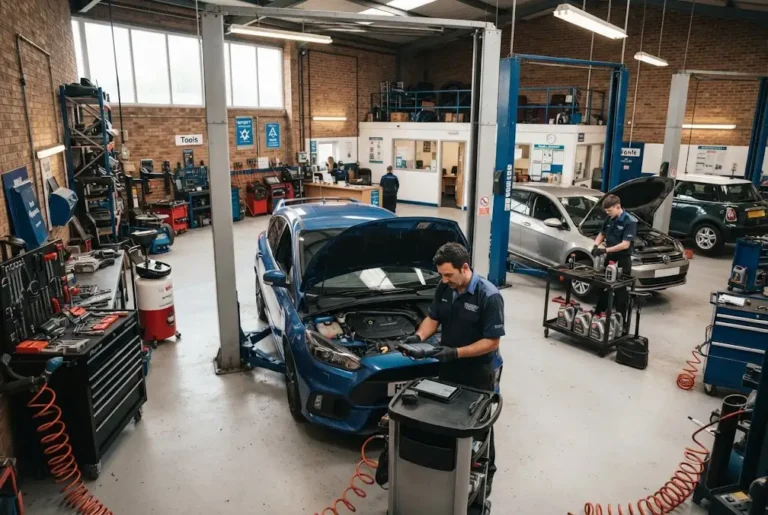
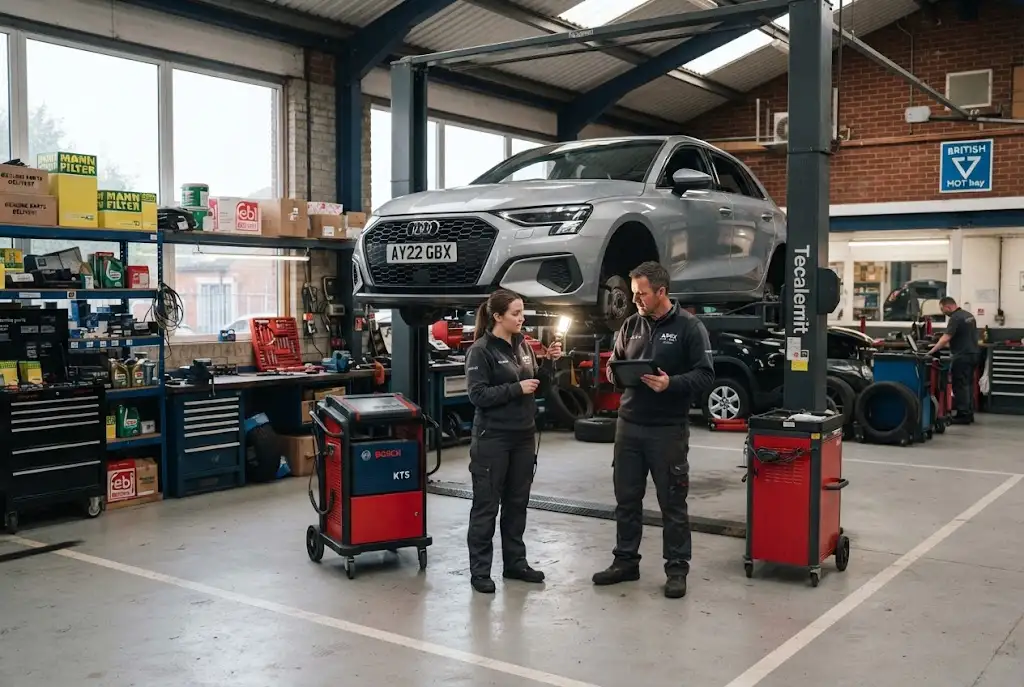
The market for auto repair services is much broader than the local garage most motorists see on their high street. Behind every repair is a network involving independent garages, authorised workshops, parts manufacturers, distributors, technicians, vehicle owners and increasingly sophisticated diagnostic technology. Together, these businesses form the UK automotive aftermarket, a major part of the country’s wider automotive economy.
Understanding this market helps explain why repair demand remains important even as vehicle technology changes. It also reveals how workshop economics, supply chains, customer behaviour and industry consolidation are reshaping the way vehicles are maintained across Britain.
What Are Auto Repair Services?
Auto repair services cover the practical work required to diagnose, maintain and restore vehicles to a safe and usable condition. Depending on the vehicle and its needs, this can include brake repairs, suspension work, exhaust repairs, electrical diagnostics, engine-related work, steering repairs, tyre services and other mechanical or electronic repairs.
The market also overlaps with servicing, MOT preparation, accident repairs and specialist technical work. As modern vehicles incorporate more electronics, sensors and driver-assistance systems, repair work increasingly combines traditional mechanical skills with digital diagnostics.
This makes the repair sector particularly interesting from a market-structure perspective. A garage may appear to be a small local business, but its ability to complete a repair can depend on parts availability, technician training, diagnostic equipment and relationships with suppliers.
Understanding the UK Automotive Aftermarket
The automotive aftermarket includes the businesses and activities that support vehicles after they have entered service. It spans maintenance and repair, parts distribution, replacement components, accessories and associated services.
The Society of Motor Manufacturers and Traders has described the UK aftermarket as an ecosystem supporting more than 42 million vehicles and tens of thousands of workshops. Its 2025 aftermarket report also highlights the economic contribution of the sector and the increasing influence of electrification, connected vehicles and advanced driver assistance technology.
This breadth matters because repair demand does not exist in isolation. When a vehicle needs a component, the garage may depend on a motor factor or another supplier. When the vehicle requires specialist diagnostics, the workshop may need specific equipment and technical information. The final customer experience therefore reflects the performance of the wider aftermarket as well as the individual repairer.
The Role of Independent Garages
Independent garages occupy an important position within the UK repair industry. They range from small owner-operated workshops to larger multi-site businesses and specialist repairers.
Independents can serve a wide range of vehicles rather than being tied to one manufacturer’s brand. Their local presence can also make them convenient for motorists who want servicing and repair close to home or work.
The structure of the sector is diverse. Some garages focus on routine servicing and mechanical repairs, while others specialise in areas such as diagnostics, tyres, transmissions, bodywork, classic vehicles or particular vehicle technologies.
This diversity gives the aftermarket a different structure from a market dominated entirely by large national operators. Smaller workshops can compete through location, technical expertise, customer relationships and specialist knowledge, while larger businesses can benefit from greater purchasing power, established processes and broader geographic coverage.
How Workshop Economics Shapes Repair Businesses
Workshop economics are central to the performance of any repair business. A garage needs to balance labour utilisation, parts costs, equipment investment, premises expenses, technician wages and customer demand.
Workshop capacity is particularly important. An empty ramp represents unused earning potential, while an overloaded workshop can create delays, pressure on technicians and a poorer customer experience. Effective scheduling therefore becomes a commercial issue as well as an operational one.
Parts procurement creates another layer of complexity. Garages generally need reliable access to suitable components without carrying excessive inventory. A fast and dependable supply chain can help workshops reduce vehicle downtime and respond to unexpected repair requirements.
Technology is adding another cost consideration. Modern vehicles can require advanced diagnostic equipment, specialist training and new safety procedures. The investment required to remain capable of repairing newer vehicles can therefore influence which services smaller workshops choose to provide.
The Importance of the Supply Chain
The automotive aftermarket depends on a substantial supply chain connecting parts manufacturers, wholesalers, motor factors, distributors, garages and vehicle owners.
For an independent repairer, the ability to obtain the correct component quickly can determine how long a vehicle remains in the workshop. Delays can affect workshop capacity, customer satisfaction and cash flow.
The supply chain also influences competition. The UK’s Competition and Markets Authority has published guidance covering agreements involving aftermarket vehicle goods and the provision of repair and maintenance services. This reflects the importance of competition in ensuring that repair businesses can access products and services needed to serve motorists.
As vehicles become more technologically complex, access to suitable parts, technical information, diagnostic capability and trained personnel becomes increasingly important. The aftermarket is therefore not simply a collection of garages; it is a connected commercial system.
What Is Driving Repair Demand?
Repair demand is influenced by several factors, including the number of vehicles on the road, vehicle age, annual mileage, maintenance habits, economic conditions and the complexity of modern vehicles.
Vehicle age is particularly relevant. UK government vehicle licensing statistics show that the average age of a licensed car reached 10 years at the end of 2025. Older vehicles can require more maintenance and repair as components wear and systems reach different stages of their operating life.
At the same time, newer vehicles are bringing a different type of demand. Electrification, electronic control systems and advanced driver assistance features require workshops to develop new skills and invest in appropriate tools.
This means repair demand is not simply moving from old mechanical work to less maintenance. Instead, the nature of workshop work is changing. Some traditional repairs remain essential, while new diagnostic, electrical and electronic capabilities become increasingly relevant.
Industry Consolidation and Changing Market Structure
Industry consolidation is another factor worth watching. National chains, regional groups and independent operators all participate in the aftermarket, creating a market where business scale can vary considerably.
Larger groups may be able to invest in technology, training, procurement systems and digital customer journeys across multiple locations. Smaller garages can compete through flexibility, specialist expertise, local reputation and close customer relationships.
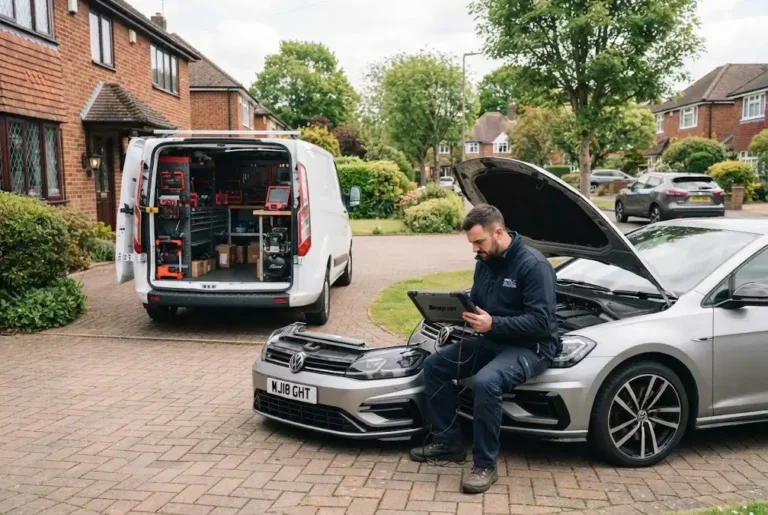
The result is a mixed market structure rather than a single dominant business model. Consumers can encounter independent workshops, manufacturer-linked operations, national chains, specialist centres and mobile service providers depending on their location and vehicle requirements.
Competition authorities have also examined consolidation within parts distribution. For example, the CMA previously required depot divestments following concerns that a major acquisition could reduce competition in certain local areas. Such cases illustrate how changes higher up the supply chain can affect the competitive environment experienced by repair businesses.
Technology Is Reshaping the Repair Industry
The repair industry is undergoing a gradual technological shift. Diagnostic software, connected vehicles, electronic control units, ADAS technology and electric powertrains are changing what technicians need to know.
Recent industry research also points to substantial investment by workshops in training, equipment and technical capability. This is important because vehicle technology does not stop developing when a new car leaves a showroom. Repair businesses must continue adapting throughout the vehicle’s service life.
For customers, the change can be less visible. A repair that once depended primarily on mechanical inspection may now involve electronic fault codes, sensor calibration or software-supported diagnosis before a technician begins physical work.
Where the UK Aftermarket Is Heading
The future of auto repair services is likely to combine traditional workshop expertise with increasingly sophisticated technology. Independent garages will remain part of this landscape, but the skills, equipment and commercial relationships required to compete may continue changing.
Electrification will influence training and workshop investment, while older petrol and diesel vehicles will continue requiring maintenance for years to come. Digital booking, online parts purchasing and mobile servicing may also create additional ways for motorists to access repairs.
For businesses, understanding these developments is more useful than focusing on one isolated trend. Repair demand, workshop economics, supply-chain reliability, customer expectations and technological capability all interact.
Why the Aftermarket Matters to Motorists
For vehicle owners, a healthy aftermarket creates choice. Drivers can access different types of workshops and service providers according to their vehicle, location, budget and repair requirements.
That choice depends on a functioning network of businesses capable of sourcing appropriate parts, employing trained technicians and investing in modern equipment. The continuing development of auto repair services is therefore closely connected to the wider health of Britain’s vehicle ownership and mobility system.
As the vehicle parc evolves, the aftermarket will evolve with it. The businesses that understand changing technology while maintaining strong workshop fundamentals will remain important parts of the UK’s automotive landscape.