

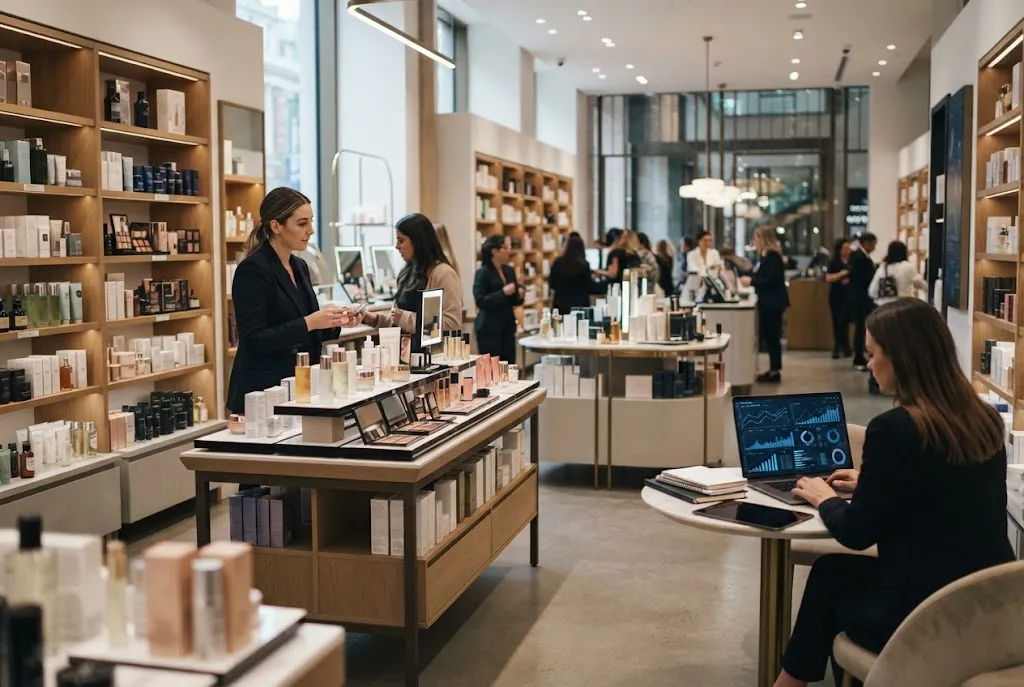
Beauty statistics UK consumers, businesses and industry professionals can use provide a clearer picture of one of Britain’s most diverse consumer sectors. From skincare and cosmetics to salons, fragrance and personal care, the UK beauty market covers a wide range of products and services. Recent official data also shows why the sector deserves attention, with measurable activity across retail, businesses, employment and cosmetic product regulation.
Looking at beauty facts rather than individual trends helps put the industry into context. Consumer preferences change quickly, but reliable UK beauty data can reveal broader patterns in spending, retail activity, business formation and product demand. This makes statistics particularly useful for anyone researching the beauty market, planning a business or simply trying to understand how beauty consumption is changing.
Beauty Statistics UK: What the Latest Data Shows
The UK beauty sector is not represented by one single statistical category. It includes cosmetics, toiletries, skincare, haircare, fragrance, beauty treatments and related businesses. Different datasets therefore measure different parts of the market.
The Office for National Statistics (ONS) published a dedicated Beauty industry 2025 dataset covering the count, employment and turnover of VAT- and PAYE-based enterprises in specified parts of the UK beauty industry. This is important because it demonstrates that the sector can be examined not only through product sales but also through business activity and employment. :contentReference[oaicite:0]{index=0}
More recent ONS retail data also provides an indication of changing sales activity. Its retail index for cosmetic and toilet articles reached 114.6 in July 2026, compared with 93.0 in the fourth quarter of 2025. The index is seasonally adjusted and should not be confused with a direct measure of total market value, but it provides useful evidence of movement in retail activity. :contentReference[oaicite:1]{index=1}
UK Beauty Industry Statistics and Business Activity
One of the most useful ways to understand the beauty industry is to look at the businesses operating within it. Beauty is not limited to large cosmetics manufacturers or national retailers. The wider sector includes salons, independent practitioners, treatment businesses and other specialist enterprises.
ONS separately published data on hairdressing and beauty treatment businesses by turnover size in 2025. The dataset covers the number of enterprises, employment, employees and turnover for businesses classified under SIC 96.02. :contentReference[oaicite:2]{index=2}
This distinction matters because beauty industry facts can look very different depending on what is being measured. A market-value report may focus on product sales, while business statistics may capture companies providing services. Both are useful, but they answer different questions.
The structure of the industry also means that independent businesses can be an important part of the overall beauty economy. Salons, aesthetic businesses and specialist practitioners can serve local markets while larger companies operate nationally or internationally.
Beauty Market Statistics by Product Category
The UK cosmetics market is made up of several major product categories. Toiletries, skincare, colour cosmetics, fragrance and other personal-care products each contribute to the wider market.
Recent Great Britain data published through Statista and sourced from the Cosmetic, Toiletry & Perfumery Association tracks the value share of cosmetics by category. The December 2025 data identifies toiletries and skincare as major parts of the cosmetics sector, while colour cosmetics represented another distinct category. :contentReference[oaicite:3]{index=3}
Category-level information is particularly useful because consumers do not spend equally across all beauty products. A change in skincare demand, for example, can affect the market differently from a change in makeup purchasing.
It also highlights why broad statements about the “beauty market” can sometimes be misleading. A market can experience strong performance in one category while another category remains comparatively subdued.
Skincare Statistics and Consumer Interest
Skincare has become one of the most closely watched parts of the beauty sector. Consumers can now choose from traditional moisturisers and cleansers as well as products built around particular ingredients, skin concerns and specialised routines.
Available Great Britain market data tracks skincare value over time, including the period through December 2025. The published dataset indicates that skincare remained a significant component of the cosmetics market. :contentReference[oaicite:4]{index=4}
However, skincare statistics should always be interpreted carefully. Market value does not necessarily tell us how many individual products were purchased or how often consumers used them. Price changes, product mix and premiumisation can all influence the value of a market.
For consumers, this means that a growing market value does not automatically mean every skincare product or brand is becoming more popular. It can instead reflect a combination of changing prices, product choices and purchasing behaviour.
Makeup Statistics and Changing Cosmetic Habits
Makeup remains an important part of British cosmetics culture, although consumer behaviour continues to evolve. Foundation, concealer, mascara, lipstick, nail products and other colour cosmetics compete for consumer attention alongside skincare and personal-care products.
Consumer research also shows that cosmetic purchasing is a measurable part of everyday behaviour. One 2025 survey covering 24,175 UK respondents aged 18 to 64 examined whether people had purchased makeup or decorative cosmetics during the previous four weeks. :contentReference[oaicite:5]{index=5}
Because the research question focused on recent purchasing, it should not be treated as a complete measurement of the entire UK population or annual cosmetics spending. Nevertheless, this type of consumer research is useful for understanding how frequently people engage with the category.
Makeup trends are also influenced by social media, fashion, entertainment and changing attitudes towards personal appearance. That makes this category particularly dynamic compared with some more established personal-care products.
Beauty Consumer Statistics and Buying Behaviour
Beauty consumer statistics are valuable because market performance ultimately depends on individual purchasing decisions. Consumers may choose products according to price, ingredients, brand reputation, convenience, sustainability, packaging or recommendations from creators and other customers.
Online discovery has made this process faster. A consumer can compare several products, read reviews and watch demonstrations before deciding what to purchase. Social platforms can also turn a relatively unfamiliar product into a widely discussed trend in a short period.
At the same time, established purchasing habits remain important. Consumers may continue buying familiar skincare, toiletries or cosmetics while experimenting with newer products occasionally.
This combination of loyalty and experimentation helps explain why the beauty market contains both long-established brands and rapidly emerging businesses.
UK Beauty Data Shows the Importance of Retail
Retail activity provides another useful measure of the health of the sector. ONS data for cosmetic and toilet article retailers shows considerable movement across recent quarters. The volume index was 104.7 in the fourth quarter of 2023, rose to 109.6 in the fourth quarter of 2024, then fell to 93.0 in the fourth quarter of 2025 before reaching 107.9 in the first quarter of 2026 and 113.4 in the second quarter. :contentReference[oaicite:6]{index=6}
These figures illustrate why a single annual statistic may not tell the whole story. Retail conditions can change significantly between periods, and seasonal patterns, economic conditions and consumer behaviour can all affect sales.
ONS retail data also reported that cosmetics and toiletries stores experienced growth for the fourth consecutive month in the three months to April 2026. :contentReference[oaicite:7]{index=7}
For businesses, monitoring this type of data can provide additional context when evaluating market conditions, although retail indices should always be considered alongside other measures.
Beauty Industry Facts About Regulation
Beauty statistics are not limited to sales and consumer spending. Regulation provides another measurable indication of the scale and complexity of the cosmetics market.
In July 2026, the UK’s Office for Product Safety and Standards reported that 861,686 cosmetic product notifications had been submitted to the Submit a Cosmetic Products Notification system since its launch in December 2020. Those notifications had been submitted by 24,112 registered Responsible Persons as of 28 May 2026. :contentReference[oaicite:8]{index=8}
The figures demonstrate the scale of products being placed on the Great Britain market and the administrative framework supporting cosmetic product safety. Businesses placing cosmetics on the GB market must notify the relevant system through a UK-based Responsible Person, while different arrangements apply to cosmetics placed on the Northern Ireland market. :contentReference[oaicite:9]{index=9}
For businesses, regulatory requirements are therefore an important part of understanding the UK cosmetics industry alongside sales and consumer statistics.
Why Beauty Market Statistics Matter to Businesses
Beauty market statistics can support decisions across product development, marketing, retail and business planning. A company considering a new skincare product, for example, may examine category demand before deciding how to position the product.
Established businesses can use market information to identify changes in consumer behaviour, while smaller businesses may use broader industry data to understand the environment in which they operate.
Statistics can also help separate genuine market movements from short-term online trends. A product may receive significant attention on social media without producing a comparable change across the wider market.
This is why reliable sources matter. Official datasets and clearly documented research provide a stronger foundation for business decisions than isolated claims shared without methodology.
How Sustainability Is Affecting Beauty Statistics
Sustainability is increasingly connected with purchasing decisions across the beauty sector. Consumers and businesses are paying greater attention to packaging, waste, sourcing and product lifecycles.
This creates new questions for future beauty industry research. Instead of measuring only how much consumers spend, researchers may increasingly examine packaging choices, refill systems, product longevity and other environmental factors.
The sustainability conversation also connects closely with the broader topic of sustainable beauty, where environmental considerations are becoming part of product development and consumer decision-making.
What Beauty Statistics UK Readers Should Watch Next
The most useful beauty statistics are not necessarily the biggest numbers. Trends over time can provide more insight than a single market figure.
Readers and businesses should watch several areas: retail sales, skincare demand, cosmetics purchasing, beauty service businesses, product notifications and changing consumer preferences. Comparing several indicators can provide a more balanced view of the sector.
It is also useful to distinguish between Great Britain and the wider UK. Some market datasets specifically cover Great Britain, while other business and regulatory statistics cover the United Kingdom or have separate arrangements for Northern Ireland. Geographic definitions should therefore always be checked before comparing figures.
The Bigger Picture Behind UK Beauty Data
The available data shows that the British beauty sector is much broader than cosmetics shelves alone. It includes products, services, retailers, independent businesses, manufacturers, consumers and regulatory systems.
Current data from official sources also shows that beauty retail activity can move significantly over relatively short periods, while product notification figures demonstrate the scale of the regulated cosmetics market. Together, these indicators provide a more useful picture than any isolated beauty statistic. :contentReference[oaicite:10]{index=10}
For readers exploring the wider sector, these findings also provide a foundation for understanding the UK beauty industry, including its businesses, market structure and future direction.
Ultimately, beauty statistics UK audiences can rely on should be read with context. Market value, retail volume, consumer surveys and business counts each measure different aspects of beauty. When considered together, however, they reveal a sector that is commercially significant, highly diverse and continually changing.
