

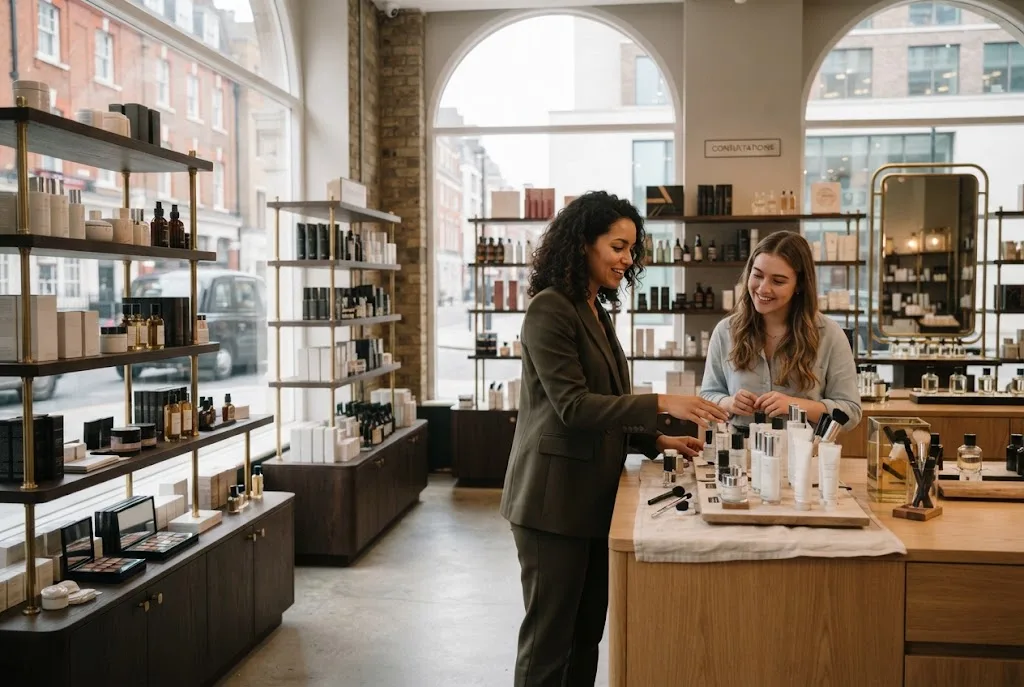
The UK beauty industry is a broad and constantly evolving sector covering cosmetics, skincare, fragrance, haircare, beauty treatments, retail and specialist services. From independent salons and emerging brands to established cosmetic companies and major retailers, the industry supports a diverse business ecosystem across Britain.
Understanding the UK beauty industry requires more than looking at product sales. Business activity, consumer preferences, regulation, sustainability, digital commerce and changing beauty habits all influence how the market develops. Recent official data also provides a useful picture of the businesses, employment and turnover associated with the sector.
For consumers, entrepreneurs and established beauty businesses, these developments offer important insight into where the UK beauty market is heading and what opportunities or challenges may emerge next.
What Is the UK Beauty Industry?
The UK beauty industry includes businesses involved in producing, distributing, selling or providing services connected with personal appearance and care. This can include skincare, makeup, fragrance, toiletries, haircare, beauty treatments and related professional services.
The sector is therefore considerably broader than the cosmetics industry alone. A skincare manufacturer, independent facialist, hair and beauty salon, fragrance retailer and specialist cosmetic brand can all form part of the wider beauty economy while operating very different business models.
The Office for National Statistics published its Beauty industry 2025 dataset in March 2026. It covers counts, employment and turnover of VAT- and PAYE-based enterprises in specified UK beauty-industry categories, as well as hairdressing and beauty treatment businesses by turnover size. :contentReference[oaicite:0]{index=0}
UK Beauty Market Structure
The UK beauty market is made up of several interconnected segments. Product-based businesses compete across skincare, colour cosmetics, fragrance, haircare and personal care, while service businesses operate through salons, clinics, independent practitioners and other specialist settings.
Retail provides another important layer. Consumers can purchase beauty products through department stores, specialist retailers, supermarkets, independent shops and online platforms. This mixture of channels gives brands multiple ways to reach customers.
Digital commerce has also changed the relationship between brands and consumers. A customer can discover a product through social media, research its ingredients, compare prices and complete a purchase without visiting a physical store.
At the same time, physical beauty retail remains important for products where customers value demonstrations, consultations, colour matching or the opportunity to experience textures and fragrances before buying.
UK Beauty Industry Trends Shaping the Market
Several trends are influencing the direction of the UK beauty industry. Some are technological, while others reflect changing consumer expectations.
Personalisation
Consumers increasingly expect products and recommendations to feel relevant to their individual needs. This can involve skincare routines, fragrance preferences, makeup shades or professional beauty treatments.
Personalisation can also help businesses differentiate themselves in crowded categories. Instead of competing solely on price, a brand can focus on a particular consumer need or experience.
Digital Beauty Discovery
Social media and online content have become major parts of the product-discovery process. Tutorials, reviews, demonstrations and creator recommendations can influence what consumers notice and investigate.
This has shortened the distance between emerging brands and consumers. A smaller company can build awareness without relying entirely on traditional retail distribution, although converting online attention into sustainable sales remains a separate challenge.
Premiumisation
Some consumers are willing to spend more on products that offer distinctive formulations, sensory experiences, packaging, brand heritage or specialist positioning.
This trend connects the mainstream market with the growing interest in luxury beauty, where consumers may place greater value on craftsmanship, expertise and the overall purchasing experience.
Sustainability
Sustainability has become another important consideration. Consumers and businesses are paying greater attention to packaging, waste, sourcing and environmental claims.
Brands are therefore increasingly expected to explain what their sustainability claims actually mean rather than relying on broad terms such as green or eco-friendly. This makes sustainable beauty an important part of the wider UK beauty conversation.
UK Beauty Industry Statistics and Business Activity
Official business data provides useful evidence of the scale of the sector. The ONS Beauty industry 2025 dataset specifically measures enterprise counts, employment and turnover for selected beauty-industry classifications. :contentReference[oaicite:1]{index=1}
ONS also separately examines hairdressing and beauty treatment businesses by turnover size. This is significant because services form an important part of the broader beauty economy and cannot be fully understood through cosmetic product sales alone.
Business statistics should always be interpreted according to the categories being measured. A figure covering beauty treatment enterprises is not equivalent to a statistic covering the retail value of cosmetics. Different datasets answer different questions.
For anyone researching the market, comparing several indicators can therefore provide a more reliable picture than relying on a single headline number. This is also why current beauty statistics UK readers can use should be considered alongside consumer and retail information.
The Role of UK Beauty Businesses
The strength of the UK beauty industry comes partly from its diversity of businesses. Large companies may have extensive distribution networks and significant marketing resources, while independent businesses can compete through specialist knowledge, personal service and strong local relationships.
Independent salons and practitioners can develop loyal customer bases by offering personalised treatments and convenient local services. Meanwhile, direct-to-consumer brands can use online channels to reach audiences beyond their immediate geographic area.
For entrepreneurs, this creates several possible routes into the market. A business might focus on products, professional services, education, technology, retail or a combination of these areas.
However, competition is strong. New entrants need more than an attractive brand identity. They also need reliable products, effective operations, appropriate compliance procedures and a clear understanding of their target customers.
Beauty Industry Regulations UK Businesses Need to Understand
Regulation is a major consideration for businesses selling or supplying cosmetics in the UK. The rules differ according to whether products are being placed on the Great Britain or Northern Ireland market.
For Great Britain, the government explains that cosmetic products are subject to the UK cosmetics regime based on Regulation (EC) No 1223/2009 as amended for the GB market. Businesses must meet requirements covering areas such as product safety, responsible persons, product information, notification and labelling. :contentReference[oaicite:2]{index=2}
One important requirement is the Responsible Person. Cosmetic products made available to consumers in Great Britain must have a Responsible Person who ensures that applicable safety measures and legal obligations are met. :contentReference[oaicite:3]{index=3}
Businesses also need to understand the product information and notification requirements before making products available to consumers.
UK Cosmetics Regulations and Product Notifications
Cosmetic businesses placing products on the Great Britain market must use the Submit Cosmetic Product Notification service operated by the Office for Product Safety and Standards. The government provides a dedicated process explaining when notification is required and who can submit it. :contentReference[oaicite:4]{index=4}
Product information is another important part of compliance. Government guidance states that cosmetic packaging must provide relevant information such as precautions, product quantity, Responsible Person details, identification information, applicable dates and ingredients. :contentReference[oaicite:5]{index=5}
These requirements demonstrate why regulatory planning should be considered before launching a cosmetic product rather than after it reaches the market.
Why Northern Ireland Is Different
Businesses selling cosmetics across the UK also need to understand the distinction between Great Britain and Northern Ireland.
Northern Ireland continues to align with relevant EU cosmetics rules under the Windsor Framework. The government states that businesses placing cosmetic products on the Northern Ireland market must follow the applicable EU Cosmetics Regulation, while separate GB rules apply to products placed on the Great Britain market. :contentReference[oaicite:6]{index=6}
This can create additional compliance considerations for brands operating across the entire UK. A business should therefore establish where a product will be placed on the market and identify the appropriate regulatory process before distribution begins.
For businesses expanding from Great Britain into Northern Ireland, or vice versa, professional regulatory advice may be appropriate where the requirements are complex.
UK Cosmetics Industry and Product Safety
Product safety is fundamental to the cosmetics sector. Government guidance states that cosmetic products made available in Great Britain must undergo an appropriate safety assessment by a qualified professional before they are made available to consumers. :contentReference[oaicite:7]{index=7}
The regulatory framework also covers product information files, safety assessments, restricted substances and market surveillance. The current GB guidance was updated in June 2026, showing that businesses need to monitor regulatory developments rather than treating compliance as a one-time task. :contentReference[oaicite:8]{index=8}
This is particularly important for growing brands that introduce new products, change formulations or expand into additional markets.
How Sustainability Is Changing the UK Beauty Market
Sustainability is increasingly influencing both product development and consumer expectations. Packaging is one visible area, but sustainability can also involve sourcing, manufacturing, transportation, product longevity and disposal.
For beauty brands, this creates an opportunity to rethink packaging and product design. Refillable formats, reduced packaging and clearer disposal information can potentially support more responsible consumption when implemented effectively.
However, environmental marketing claims must be accurate and supportable. Businesses should avoid presenting a limited environmental improvement as though it represents the complete environmental performance of a product.
Consumers are also becoming more interested in the practical meaning behind sustainability claims. This makes transparency increasingly important for companies operating in the UK beauty market.
How Consumer Behaviour Is Changing
Beauty consumers are no longer relying on one source of information. A shopper may encounter a product through social media, investigate its ingredients through a search engine, read customer reviews and then compare prices across several retailers.
This creates a more informed but also more competitive environment for brands. Companies need to communicate clearly across multiple channels and provide consistent information about products.
Consumers are also becoming more comfortable combining different approaches. Someone may buy affordable everyday cosmetics while investing in premium skincare or fragrance. Another consumer may prioritise sustainability or choose independent brands because of their values and personal connection with the business.
These overlapping preferences make the market difficult to define through a single beauty trend.
The Importance of British Beauty Culture
The commercial market is closely connected with cultural behaviour. British consumers have diverse ideas about appearance, grooming and personal expression, and those preferences influence the products and services businesses develop.
As discussed in British beauty culture, regional influences, generations, social media, fashion and international communities all contribute to the UK’s changing beauty landscape.
For brands, understanding this cultural diversity can be more valuable than attempting to promote one universal definition of beauty.
Opportunities for UK Beauty Businesses
The UK beauty industry offers opportunities across products, services and technology. Businesses can compete through specialist expertise, strong customer service, innovative formulations, distinctive branding or highly focused niches.
Digital tools have also reduced some barriers to market entry. A small brand can build an online audience and sell directly to customers without immediately establishing a large physical retail network.
However, lower barriers to entry also mean more competition. A successful business needs a clear proposition and reliable execution.
Independent and Specialist Brands
Smaller companies can compete by focusing on a specific consumer problem or underserved audience. Specialist positioning can make it easier to communicate why a product or service deserves attention.
Professional Beauty Services
Salons, therapists and specialist practitioners can differentiate themselves through expertise, service quality and customer relationships. Local reputation can remain particularly valuable in service-led beauty businesses.
Digital-First Beauty
Online brands can build communities around education, product demonstrations and direct communication. However, digital visibility needs to be supported by good customer experience, transparent information and dependable fulfilment.
Challenges Facing the UK Beauty Industry
Despite its opportunities, the sector faces several challenges. Competition is intense, customer attention is fragmented and beauty trends can change rapidly.
Regulatory compliance can also create additional work for businesses, particularly those developing new formulations or operating across Great Britain and Northern Ireland.
Another challenge is maintaining credibility. Consumers are exposed to a large volume of beauty claims every day, making trust increasingly important.
Businesses that communicate clearly, provide accurate product information and avoid exaggerated claims can build stronger long-term relationships with customers.
The Future of the UK Beauty Industry
The UK beauty industry outlook is likely to be shaped by a combination of technology, consumer behaviour, regulation and sustainability.
Personalised recommendations, digital commerce and social discovery are likely to remain important. Meanwhile, businesses will need to keep up with evolving product-safety requirements and market expectations.
Sustainability may also become increasingly integrated into product development rather than treated as a separate marketing theme. Packaging design, resource efficiency and responsible communication are likely to remain important considerations.
Premium and specialist beauty should also continue to have a place in the market. Consumers do not all define value in the same way, creating room for affordable, premium and luxury propositions.
What Businesses Should Watch
Companies operating in the UK beauty market should monitor several areas rather than relying on one trend.
- Changes in consumer purchasing behaviour
- Growth or decline across individual beauty categories
- Retail and online shopping patterns
- Regulatory changes affecting cosmetic products
- Packaging and sustainability requirements
- Emerging beauty technologies
- Changes in customer expectations around transparency
Regularly reviewing these factors can help businesses identify opportunities while reducing the risk of building strategies around short-lived trends.
Final Thoughts on the UK Beauty Industry
The UK beauty industry is a diverse ecosystem combining products, services, retailers, independent businesses, established companies and increasingly sophisticated consumers. Its future will be shaped by more than product launches alone.
Official business data provides evidence of the sector’s economic activity, while the regulatory framework demonstrates the importance of safety and compliance. At the same time, sustainability, digital discovery, personalisation and changing beauty habits are reshaping how businesses compete.
For consumers, this creates more choice than ever. For businesses, it creates both opportunity and responsibility.
The brands most likely to succeed in the evolving UK beauty market will be those that combine product quality with clear positioning, reliable compliance, meaningful customer experiences and an honest understanding of what modern British consumers actually value.
