

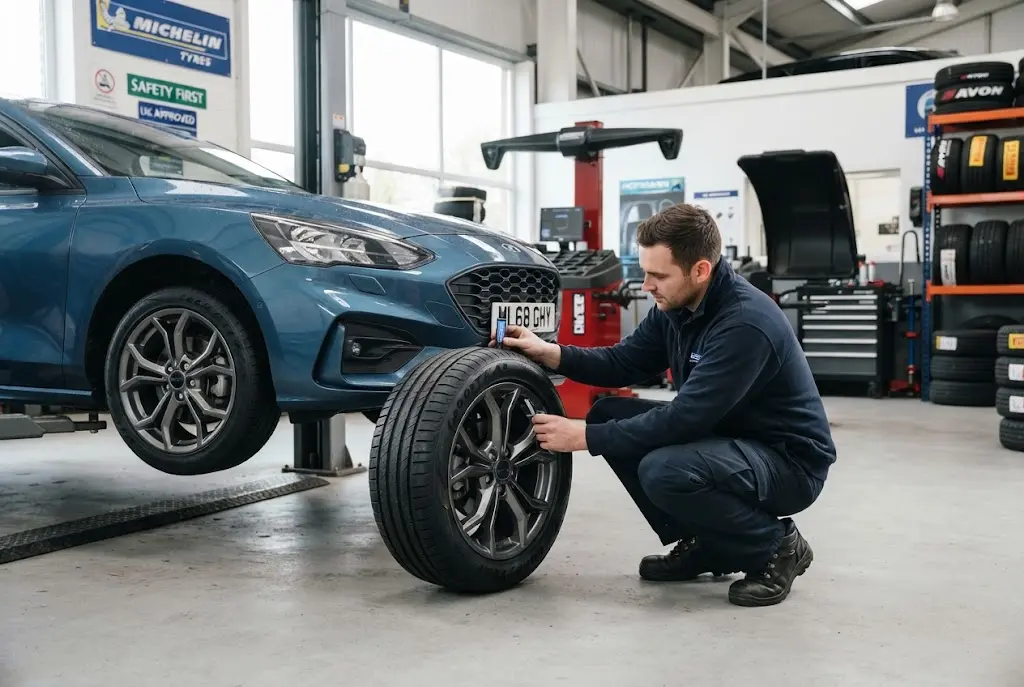
Tyre services play an important role in keeping vehicles safe, roadworthy and ready for everyday UK driving. Tyres are the only parts of a car that maintain direct contact with the road, so their condition can affect grip, steering, braking and overall vehicle stability.
For motorists, tyre maintenance is about more than replacing worn rubber. Professional tyre fitting, timely tyre repairs, correct balancing and appropriate replacement can all contribute to safer and more predictable driving. Understanding when each service is needed can also help drivers avoid unnecessary costs and identify problems before they become more serious.
Why Tyre Services Matter for Road Safety
Good tyre condition is a fundamental part of road safety. UK government guidance states that drivers are responsible for ensuring their vehicles are safe to drive, even when the vehicle has a current MOT certificate. Tyres must have the correct tread depth and be free from certain cuts and defects.
For most cars, light vans and light trailers, the legal minimum tread depth is 1.6mm across the central three-quarters of the tread and around the entire circumference.
That legal threshold should not be treated as a target for routine maintenance. Drivers should regularly inspect their tyres for visible damage, unusual wear and pressure problems. A tyre can develop a safety issue before it reaches the legal tread limit.
This is where professional tyre services can provide useful support. A qualified technician can inspect the tyre and wheel assembly, identify irregular wear and advise whether a repair, replacement or another service is appropriate.
What Are the Main Tyre Services?
The term tyre services covers several different forms of maintenance. The correct option depends on the condition of the tyre, the wheel and the vehicle.
Tyre Fitting
Tyre fitting involves removing an existing tyre and correctly installing another tyre onto the wheel. Proper fitting matters because a tyre must be suitable for the vehicle and correctly seated on the rim.
Professional fitting can also include checking the tyre specification, valve condition and inflation pressure. Once fitted, the wheel may need balancing before it is returned to the vehicle.
Drivers should also make sure replacement tyres are appropriate for their vehicle rather than choosing solely on price. The vehicle handbook and manufacturer information can help establish the correct tyre specification and recommended pressures.
Tyre Replacement
Tyre replacement may be necessary when a tyre has reached the end of its usable life, has serious structural damage or has worn unevenly enough to compromise safety.
Visible cuts, bulges, exposed cords or significant structural deterioration should not be ignored. UK MOT guidance identifies various tyre defects that can result in a vehicle failing its inspection, with some defects classified as dangerous.
Replacement decisions should therefore consider more than tread depth alone. A tyre with adequate tread can still require attention if it has significant damage or another defect.
Tyre Repairs
Tyre repairs can sometimes be appropriate when damage is limited and the tyre remains structurally suitable for repair. However, not every puncture or damaged tyre should be repaired.
A professional inspection is important because the location, size and nature of the damage can affect whether a repair is safe. Damage involving the tyre’s structure or sidewall may require replacement rather than repair.
Drivers should avoid treating every slow puncture as a simple inconvenience. Repeated pressure loss can indicate an underlying problem with the tyre, valve, wheel or another component.
Tyre Balancing
Tyre balancing helps distribute the weight of the wheel and tyre assembly more evenly. When a wheel is not properly balanced, drivers may notice vibration through the steering wheel or vehicle, particularly at certain speeds.
Balancing is commonly considered when new tyres are fitted, but it can also be relevant when vibration develops during normal driving. Correct balancing can contribute to smoother operation and help prevent uneven wear.
How Tyre Condition Can Affect Your Tyre Lifespan
There is no single mileage figure that guarantees how long a tyre will last. Tyre lifespan depends on factors including driving style, road conditions, vehicle loading, tyre pressure, alignment, storage and the amount of use.
Incorrect inflation can contribute to uneven wear. Alignment problems can also cause one part of the tread to wear more quickly than the rest. If these underlying issues are not addressed, replacing the tyre may only solve the problem temporarily.
Regular checks therefore make financial sense as well as supporting safety. Identifying uneven wear early may allow the underlying cause to be investigated before another tyre is damaged.
Tyre Pressure and Regular Checks
Tyre pressure should be checked using a reliable pressure gauge and compared with the vehicle manufacturer’s recommended figures. GOV.UK driving-test guidance advises checking pressures when the tyres are cold and consulting the manufacturer’s information for the correct pressure.
Pressure should not be judged simply by looking at the tyre. A tyre can be incorrectly inflated without appearing obviously different from the driver’s normal view.
Regular checks are particularly important before longer journeys, when the vehicle is heavily loaded or when seasonal driving conditions change. Drivers should also inspect the visible tyre surfaces for cuts, bulges and other damage.
When Should You Consider Tyre Services?
There are several situations in which arranging a professional inspection is sensible:
- You notice a persistent loss of tyre pressure.
- The tread appears unusually worn or uneven.
- You find a cut, bulge or other visible damage.
- The steering wheel vibrates at certain speeds.
- The vehicle pulls to one side during normal driving.
- You are preparing for a long-distance journey.
- You are approaching the end of the tyre’s usable tread.
- You have recently experienced a puncture or impact with a pothole or kerb.
These signs do not automatically mean that a new tyre is required. An inspection can help establish whether the appropriate response is a repair, replacement, balancing service, pressure adjustment or further mechanical investigation.
Tyre Services and MOT Preparation
Tyres are among the components inspected during an MOT. The official MOT inspection checks tyre condition, security, size and type, as well as tread depth. Vehicles first used on or after 2012 are also checked for the operation of the tyre pressure monitoring system warning lamp where applicable.
However, motorists should not wait until an MOT is due before checking their tyres. An MOT is an inspection at a particular point in time, while tyre condition can change throughout the year.
Routine checks between MOT appointments can help drivers identify developing problems sooner. This is particularly relevant for vehicles that cover high annual mileage or regularly travel on poor-quality roads.
How to Choose a Tyre Service Provider
When comparing tyre services, motorists should look beyond the headline price. A suitable provider should be able to explain what work is required and why it is necessary.
It is useful to ask whether the quoted service includes fitting, balancing, valve replacement or other relevant work. Drivers should also confirm that the replacement tyre specification is suitable for their vehicle.
A transparent approach is especially valuable when a tyre has suffered damage. If a repair is not appropriate, the provider should be able to explain why replacement is recommended rather than simply presenting a more expensive option.
Tyre Services Should Be Part of Wider Vehicle Maintenance
Tyres should not be considered separately from the rest of the vehicle. Brakes, suspension, steering and wheel alignment can all influence how tyres perform and how evenly they wear.
For motorists researching wider vehicle maintenance costs, understanding options such as repair finance and payment plans can also help when an unexpected repair becomes necessary. Similarly, drivers buying a used vehicle may benefit from arranging a vehicle inspection before committing to a purchase.
These areas form part of a broader approach to vehicle ownership. Looking at maintenance requirements before problems become urgent can make ownership more predictable and help drivers make better-informed decisions.
Simple Habits That Can Support Tyre Safety
Drivers can take several straightforward steps to support tyre condition throughout the year.
- Check tyre pressures regularly using the manufacturer’s recommended figures.
- Inspect tyres for cuts, bulges and obvious damage.
- Monitor tread wear rather than waiting for the legal limit.
- Pay attention to vibration, pulling or other changes in handling.
- Check tyres before long journeys.
- Have persistent pressure loss investigated.
- Use professional advice when you are unsure whether a tyre can be safely repaired.
These habits do not replace professional maintenance, but they can help drivers recognise problems earlier.
Final Thoughts on Tyre Services
Tyre services cover much more than simply buying replacement tyres. Fitting, repairs, balancing and inspections can all play a role in maintaining safe and dependable vehicle performance.
For UK motorists, the starting point is understanding the legal requirements while recognising that road safety involves more than meeting the minimum standard. Regular pressure checks, visual inspections and prompt attention to unusual wear or damage can help keep tyres in better condition.
When professional work is required, the best approach is to match the service to the actual condition of the tyre and vehicle. That can support safer driving, avoid premature replacement and potentially extend the useful tyre lifespan of properly maintained tyres.
For the latest official guidance on vehicle roadworthiness and tyre requirements, motorists can consult the GOV.UK vehicle safety guidance.
