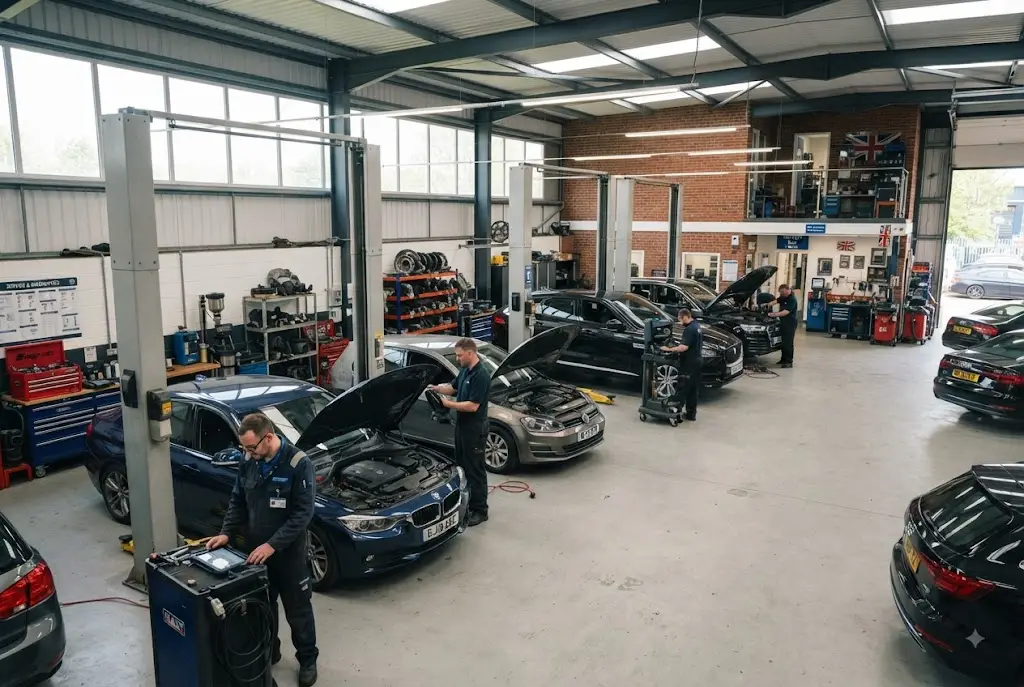
Automotive service companies sit at the centre of Britain’s vehicle maintenance and repair economy. They include independent garages, authorised workshops, fast-fit operators, specialist repairers, bodyshop networks and larger workshop groups serving private motorists, fleets and commercial customers.
The sector is more complicated than a simple comparison between a national garage chain and a local mechanic. Different businesses operate with different cost structures, customer relationships, technical capabilities and growth strategies. Some rely on a single workshop and a strong local reputation, while others build networks across multiple regions or use franchise and partnership models to expand their reach.
At the same time, vehicle technology is changing the economics of servicing. Hybrid and electric vehicles require new technical skills, diagnostic equipment and safety procedures, while rising operating costs are putting pressure on workshops of every size. Understanding the business behind automotive servicing therefore provides useful context for anyone researching Britain’s wider aftermarket.
What Are Automotive Service Companies?
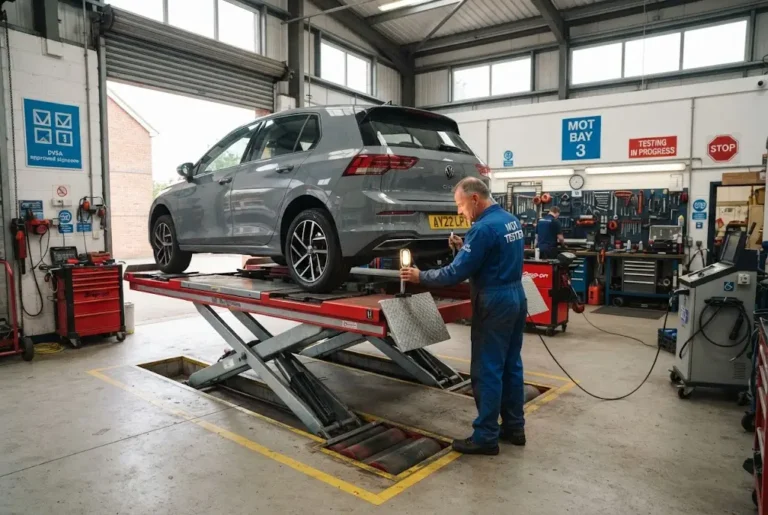
Automotive service companies are businesses that provide maintenance, repair, inspection or related support for vehicles. Their activities can range from routine oil and filter changes to complex diagnostics, transmission repairs, electrical work, tyre services, MOT testing and accident repair.
The term covers several distinct business models. A local independent garage may have only a handful of employees, while a workshop group can operate dozens or hundreds of locations. An authorised workshop may operate under a vehicle manufacturer’s standards, whereas an independent business can select equipment, suppliers and service procedures according to its own commercial strategy.
There are also networks that sit between these models. Independent garages can join branded programmes that provide training, technical information, marketing support, purchasing benefits and customer-facing standards without requiring the garage to become a conventional company-owned branch.
This variety is one reason the UK automotive aftermarket remains highly competitive.
How the UK Automotive Service Market Is Structured
Britain’s automotive service market contains a broad mixture of independent garages, manufacturer-affiliated workshops, fast-fit operators, specialist businesses and multi-site groups.
The Independent Automotive Aftermarket Federation describes the wider aftermarket as bringing together suppliers, manufacturers, parts distributors, garages and service providers. That ecosystem is important because a workshop’s performance depends not only on customer demand but also on access to parts, technical information, diagnostic equipment, training and skilled labour.
Independent businesses remain a major part of this structure. The Trust My Garage consumer code, for example, is specifically designed for independent garages and reports thousands of participating members across the UK. This demonstrates that independent workshops can operate within structured quality and consumer-protection frameworks rather than competing entirely outside organised networks.
For customers, the distinction between independent and corporate businesses is therefore less straightforward than it may initially appear.
Independent Garages Versus Authorised Workshops
One of the most important competitive relationships in the sector is between independent garages and authorised workshops.
Authorised workshops are generally connected to vehicle manufacturers or dealer networks. They can provide brand-specific technical expertise, manufacturer diagnostic systems and access to procedures designed for particular vehicle ranges. These advantages can be valuable for newer vehicles, warranty-related work and repairs involving complex manufacturer systems.
Independent garages, however, often compete through flexibility, local reputation and breadth of experience. Many have developed strong capabilities across multiple vehicle brands and can provide routine servicing and repairs without the customer necessarily needing to visit a franchised dealer.
The choice can depend on the vehicle, the type of repair and the customer’s priorities. A routine maintenance job may be suitable for a capable independent workshop, while a complicated manufacturer-specific fault could make specialist or authorised expertise particularly valuable.
The growing importance of electronic systems is making access to technical information increasingly significant. The IAAF has highlighted the issue of independent garages obtaining access to vehicle manufacturer repair and maintenance information, showing how information access can influence competition across the aftermarket.
Why Workshop Groups Are Becoming More Important
Workshop groups can achieve advantages that are difficult for a single-site business to replicate. Multiple locations can spread administrative costs, strengthen purchasing relationships and create greater visibility with fleet operators and national customers.
Scale can also support investment. Diagnostic equipment, technician training, customer-booking systems, marketing and data infrastructure can require significant expenditure. A larger organisation may be able to spread those costs across a wider revenue base.
However, growth also introduces management challenges. A workshop group needs consistent processes while dealing with different local markets, property costs, staffing conditions and customer expectations. The larger the network becomes, the more important operational control and performance measurement can become.
This is why successful automotive groups tend to treat workshop management as a business discipline rather than simply an expansion exercise.
Consolidation in the Automotive Service Sector
Consolidation is an important theme in the British automotive aftermarket. It occurs when businesses acquire other operators, combine networks, form larger groups or bring previously independent locations under a common structure.
There are several reasons why consolidation can make commercial sense. An acquiring business may gain established locations, experienced technicians, customer relationships and access to local markets without having to build every site from the beginning.
Recent developments involving established garage networks demonstrate how quickly the competitive landscape can change. The closure of ATS Euromaster’s UK operations in 2026 resulted in some former locations being acquired by other operators, including Formula One Autocentres. Such transactions can redistribute workshops and customers between competing businesses rather than simply reducing the overall importance of the aftermarket.
Consolidation can also happen more gradually through investment in independent businesses, franchise arrangements and the creation of branded networks. In those cases, the garage may retain local ownership while gaining access to centralised commercial support.
What Drives the Business Strategy of Automotive Service Companies?
The business strategy of an automotive service company usually revolves around several interconnected priorities: workshop utilisation, customer retention, technician productivity, parts availability, pricing, location and investment.
Location and workshop utilisation
A workshop needs sufficient customer demand to cover rent, rates, utilities, wages, equipment and other operating costs. A well-known brand cannot compensate indefinitely for a poorly located or underused site.
Customer retention
Repeat business is especially valuable in vehicle servicing. A customer who returns for annual maintenance, tyres, brakes and repairs can generate substantially more long-term value than someone who visits once.
Technician productivity
Labour is one of the central resources in the workshop business. Efficient scheduling, appropriate training and access to the right tools can directly influence how many productive hours a site generates.
Parts and procurement
Parts availability affects both customer satisfaction and workshop efficiency. Delays can keep vehicles on ramps for longer, reducing capacity and potentially damaging customer relationships.
Technology investment
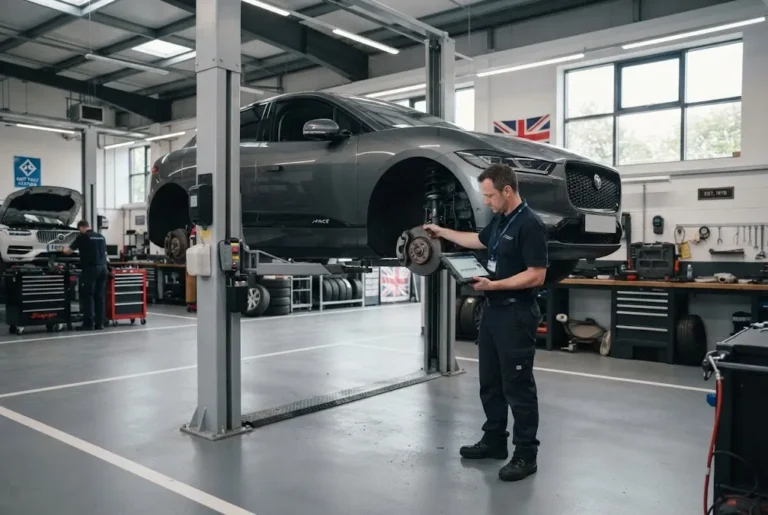
Modern diagnostic equipment is becoming increasingly important as vehicles contain more electronic control systems. Automotive service companies must therefore consider whether their equipment and staff capabilities match the vehicles entering their workshops.
Why Rising Costs Matter to Workshop Businesses
Operating costs are becoming a significant concern across the UK service and repair sector. The Motor Ombudsman’s 2026 research found that rising costs were expected to be one of the biggest challenges for vehicle repairers, alongside pressure on customers’ ability to afford maintenance and difficulties recruiting experienced technicians.
For automotive service companies, rising costs create a difficult commercial equation. Increasing prices may be necessary to protect margins, but customers facing household budget pressures may postpone routine maintenance or compare more providers before booking.
This makes operational efficiency increasingly important. Businesses need to understand which services generate healthy margins, which locations perform best and where investment can produce measurable returns.
The Growing Importance of Technician Skills
The technician is becoming an increasingly valuable strategic asset. Cars now combine mechanical components with sophisticated electronic systems, software and driver-assistance technologies. Consequently, the skills required to diagnose and repair modern vehicles are changing.
For automotive service companies, recruitment is only part of the challenge. Existing technicians may also require continuing professional development as vehicle technology evolves.
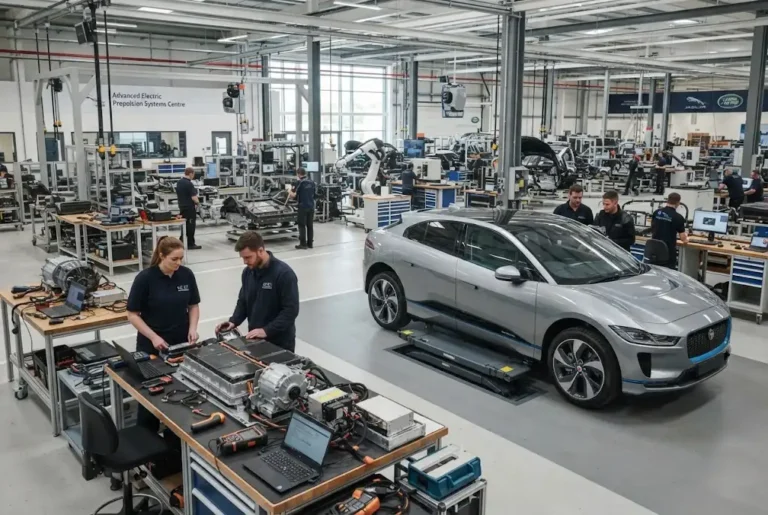
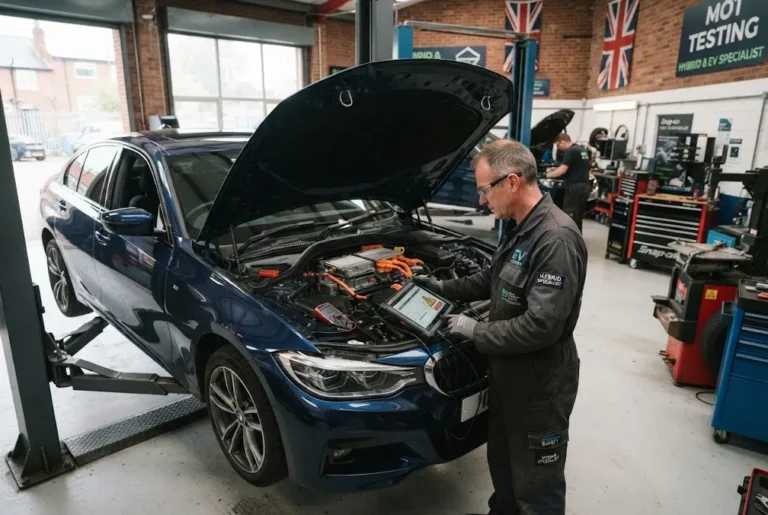
This is particularly relevant to hybrid and electric vehicles. High-voltage systems require appropriate training and safety procedures, while battery technology and electric drivetrains introduce areas of knowledge that differ from conventional engine repair.
The shift is already visible within independent networks. Industry recognition programmes in 2026 have highlighted independent garages for their electric-vehicle capability, demonstrating that EV competence is becoming a competitive feature rather than simply a future consideration.
Our related coverage of hybrid servicing examines how workshops are adapting to hybrid ownership, while our upcoming EV servicing research will look more closely at electric vehicle maintenance and technician readiness.
Market Performance Is About More Than Revenue
When assessing market performance, revenue is only one measure. Automotive service companies also need to consider workshop utilisation, customer retention, average repair value, labour efficiency, parts margins and the performance of individual locations.
A large network may generate substantial sales while still struggling with underperforming sites. Conversely, a smaller independent garage can remain commercially healthy because it has lower overheads, loyal customers and a strong local reputation.
Performance should therefore be assessed relative to the business model.
For a national group, investors may focus on network growth, comparable-site performance and operating margins. For a local workshop, cash flow, repeat customers and technician productivity may be more meaningful indicators.
How Digital Booking Is Changing Customer Acquisition
The customer journey is also becoming more digital. Motorists can search for workshops, compare reviews, check service prices and request appointments without making a phone call.
This changes the competitive requirements for automotive service companies. A workshop may provide excellent technical work, but if customers cannot easily find it online or understand its services, the business can lose opportunities to competitors with stronger digital visibility.
Online booking can also improve operational planning. When appointments are captured digitally, businesses can organise workshop capacity more efficiently and reduce some of the administrative burden associated with manual scheduling.
However, digital convenience does not replace trust. Vehicle repair remains a service where customers want confidence that the diagnosis is accurate, the work is necessary and the final bill is understandable.
Where the Independent Sector Fits Into the Future
Independent garages are unlikely to disappear simply because larger groups continue to expand. Their strength often comes from local relationships, specialist knowledge and the ability to make decisions quickly.
At the same time, independents face some of the same pressures as larger organisations. They need diagnostic equipment, trained technicians, reliable parts supply and the ability to work on newer vehicles.
Joining an established garage network can provide one route to addressing these challenges. Networks such as Servicesure demonstrate how independent garages can retain their identity while accessing broader commercial and technical support.
This hybrid approach may become increasingly important. Rather than choosing between complete independence and corporate ownership, some businesses can combine local ownership with the advantages of a larger network.
What Consolidation Means for Customers
Consolidation can produce both benefits and challenges for motorists. Larger groups may offer more consistent processes, wider geographic coverage and greater investment in equipment and training.
On the other hand, reduced competition in a particular local market could limit customer choice. The impact therefore depends on how consolidation affects prices, service quality, accessibility and the number of viable alternatives available to motorists.
For consumers, the most useful response is to compare workshops on the basis of the actual service required. Brand recognition can be useful, but it should not be the only consideration.
The Future Business Model for Automotive Service Companies
The future is likely to favour automotive service companies that can combine operational efficiency with technical adaptability. Traditional mechanical servicing will remain important because petrol and diesel vehicles will continue to require maintenance for many years. Yet hybrid and electric vehicles will steadily alter the mix of workshop work.
Successful businesses will need to balance investment against demand. They will have to decide when to add EV equipment, how quickly to retrain technicians and which services deserve additional workshop capacity.
Consolidation may continue, but scale will not automatically guarantee success. Businesses still need profitable locations, effective management and a strong customer proposition.
At the same time, independent garages with strong reputations and the right technical capabilities can remain highly competitive. Their future may depend less on becoming large and more on becoming efficient, visible and technically capable.
Final Thoughts on Automotive Service Companies
Automotive service companies form a diverse and constantly changing part of Britain’s automotive economy. Independent garages, authorised workshops, fast-fit businesses and larger workshop groups all compete for the same broad pool of maintenance and repair demand, but they do so through very different business models.
Consolidation is changing ownership structures, while rising costs and technician shortages are placing pressure on operating performance. Meanwhile, hybrid and electric vehicles are forcing businesses to reconsider training, equipment and long-term investment.
The strongest businesses are therefore unlikely to be defined by size alone. Sustainable performance will depend on combining technical competence, efficient operations, customer trust, appropriate technology and a clear business strategy.
For anyone researching Britain’s automotive aftermarket, understanding these commercial forces provides a useful foundation for examining the next stage of the sector, particularly the growth of hybrid and EV servicing and the changing technical requirements of modern workshops.